It is not every day that a man ends up as the filling in a whale sandwich, but Adrián Simancas can now claim exactly that. During a father-son kayaking trip in Chile’s Strait of Magellan in early 2026, the 24-year-old was briefly greeted by the cavernous maw of a humpback whale—a moment that felt like being a single popcorn kernel dunked into a giant’s bucket. Luckily, the leviathan spat him right back out, kayak and all, like an unappetizing piece of taffy. The entire episode, captured on video by his father Dell, has since rippled across the internet faster than a startled squid’s ink cloud.
The drama unfolded last Saturday in Bahía El Águila, near the San Isidro Lighthouse—a spot where tourists often paddle alongside dolphins and the occasional curious cetacean. According to Dell Simancas’ footage, Adrián was bobbing through choppy waves, his orange life vest a bright punctuation mark on the gray-blue water. Then, without so much as a polite knock, a colossal pair of jaws erupted from beneath, enveloping both man and kayak. For a handful of heartbeats, Adrián vanished into a dark, fleshy cavern that felt, as he later described, like being smothered by a wet, muscular sleeping bag. The whale, presumably realizing its brunch was mostly fiberglass and neoprene, immediately reversed the decision, expelling the whole affair back into the daylight as if correcting a mild clerical error.
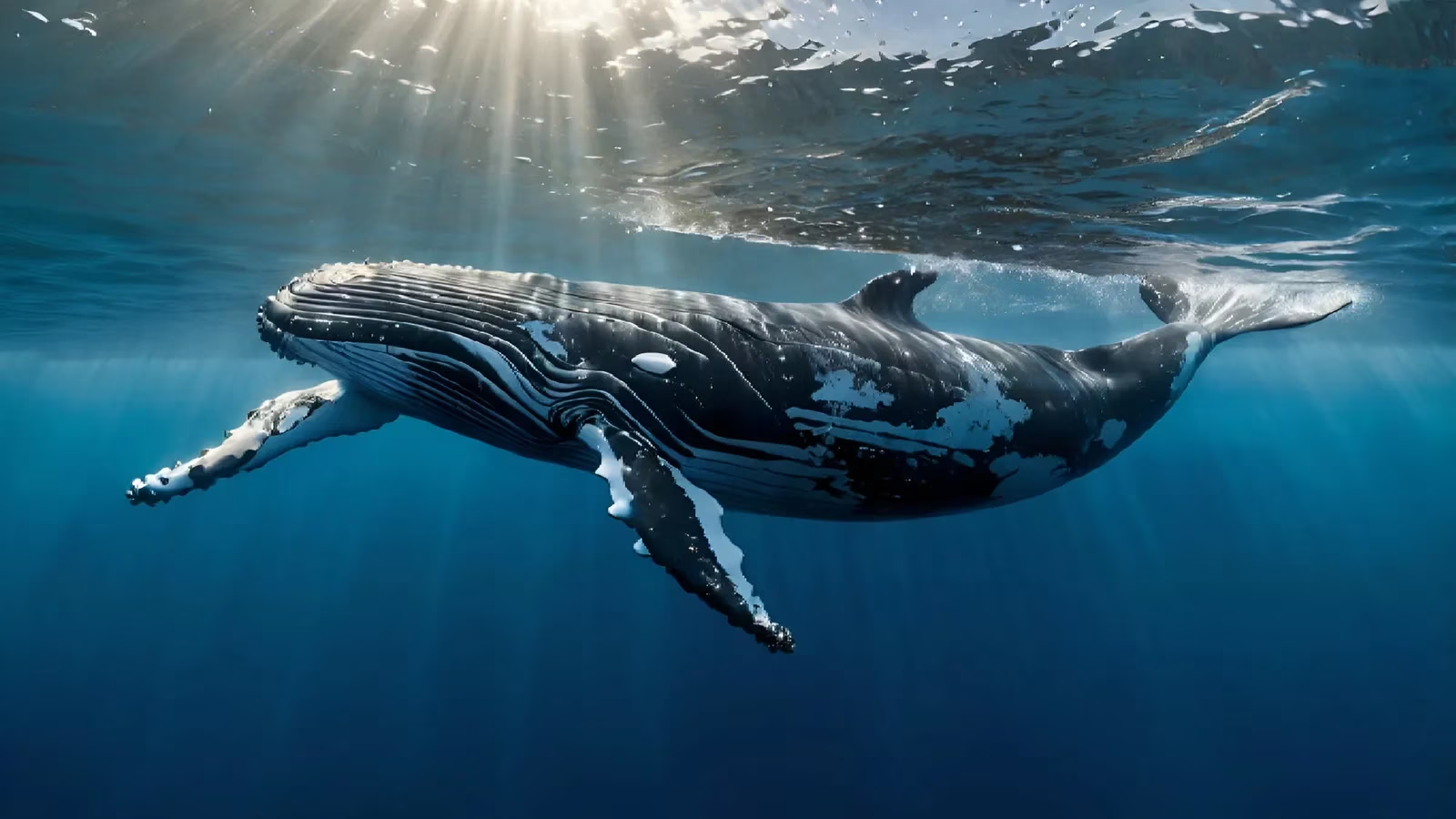
Scientists who later reviewed the footage grew almost as animated as the whale. They were quick to hose down headlines screaming that Adrián was “swallowed” or “eaten.” Jooke Robbins, a humpback researcher, pointed out the anatomical absurdity: a humpback’s throat is only about the size of a grapefruit, designed to strain menhaden, not men. What actually happened was a classic case of mistaken identity. The whale, likely lunge-feeding on a school of fish or krill, simply scooped up a foreign object that felt like a crouton in a bowl of soup. The metaphor might be stretched, but the message is clear: the young kayaker was never in danger of becoming Jonah 2.0.
Still, terror is not always based on facts, and for those few seconds, Adrián’s internal narrative was decidedly apocalyptic. He later admitted he believed his life was over, a sentiment any sensible person would share while feeling the roof of a whale’s mouth pressing down. His father Dell’s voice on the recording stays remarkably steady, urgently repeating “Tranquilo, tranquilo, agarra el bote” (“Stay calm, grab the boat”)—the vocal equivalent of a lighthouse beam cutting through panic. One gets the sense that Dell’s composure was the anchor preventing his son’s mind from spiraling into a full-blown Moby-Dick hallucination.
The aftermath has been stranger than fiction. Adrián emerged physically unscathed, though the psychological scar tissue will probably itch whenever he hears bubble sounds. The kayak bore a few scratches, likely delivered by baleen rather than teeth—humpbacks being toothless, they rely on keratin plates that could give a boat a good gumming but not a puncture. Within days, the video had accrued millions of views, turning the Simancas family into reluctant ambassadors of Chilean ecotourism. When local reporters asked if the pair would ever kayak those waters again, both responded with a defiant “yes,” proving that a near-death experience in a whale’s mouth rates only as a spicy anecdote, not a deterrent.
For those keeping score at home, the Strait of Magellan still holds its crown as a bucket-list destination. The Chilean government proudly promotes it as a place where visitors can commune with marine life, though the brochure probably omits the “temporary oral inspection” package. In truth, whale attacks are vanishingly rare, especially in this region. Far more common are humans hurting whales—through ship strikes, entanglement in fishing gear, or noise pollution. The Simancas incident serves as a bizarre reminder that the giants of the sea are generally the victims, not the predators. To quote one biologist who viewed the footage: “The whale looked as surprised as the human.” It might have been the first time in history a humpback performed a taste-test and immediately filed a complaint with the ocean’s culinary board.
The incident also underscores the curious geometry of chance. A man in a kayak, a lunging whale, a camera running at the exact right moment—it all conspired like a cosmic joke where the punchline required a GoPro. Adrián’s experience now joins the small but colorful hall of fame of people who have accidentally met the interior of a large animal, a club that includes a few snorkelers, a South African diver, and now a remarkably chill Chilean kayaker. As the video continues to circulate, armchair experts have dissected every frame, debating whether the whale’s expulsion qualifies as a spit or a puff. Semantics aside, the consensus is that the humpback was doing what any sensible creature does after putting a weird object in its mouth: eject it with a look of profound regret.
In the end, Adrián Simancas has acquired the world’s most unorthodox icebreaker for parties. While most people share travel photos of sunsets, he can casually mention the time he served as a whale’s momentary lozenge. The best part? He and his father plan to return to the very same waters, perhaps with a slightly narrower kayak and a newly minted appreciation for the phrase “keep your distance.” It seems that even a humpback’s unsolicited hug won’t keep a pair of stubborn adventurers off the water. The whale, meanwhile, likely swam away promising to stick to smaller, less rubbery snacks.
Comments