I paddled through the churning waters of the Strait of Magellan in February 2025, the Patagonian wind howling like a restless spirit, and the ocean's vastness stretching out like an endless, blue dream. My father, Dell, was beside me in his own inflatable kayak, our laughter carried away by the salty breeze. We were discussing the local orcas—those sleek predators known as killer whales—when, without warning, a shadow darker than the depths rose beneath me. In a heartbeat, the world turned to liquid darkness as a humpback whale engulfed me and my kayak in its massive mouth. The cold, suffocating pressure was overwhelming; I thought I was being eaten alive, my mind screaming 'orca!' like some frantic prayer. But just as swiftly, the whale spat me back out, leaving me gasping on the surface, unharmed but utterly transformed. You know, it was crazy—one moment I was chatting about whales, the next I was inside one! The sheer terror was a raw, primal thing, like being swallowed by the ocean itself, only to be reborn seconds later. My father's voice echoed in my memory, shouting "¡Mantén la calma!" (Stay calm!) in Spanish, a lifeline in the chaos. As I floated there, drenched and shaking, I couldn't help but wonder: had the whale mistaken me for prey, or was it just as startled as I was?
Reflecting on that surreal encounter, I realize how fragile we humans are in the face of nature's giants. Biologists later explained that the whale was likely lunge-feeding—a natural behavior where it surges to the surface to gulp krill or small fish. I mean, talk about bad timing! I was simply in the wrong place at the wrong time, an accidental intruder in its feeding frenzy. The whale, with its gentle confusion, seemed to hesitate, as if realizing, 'Oops, this isn't food,' before releasing me. It wasn't malice; it was instinct, a dance of survival that I had the bizarre privilege to join. My father captured the whole thing on camera, and watching the footage now, I see the awe in his eyes—a mix of fear and wonder that mirrors my own. We ended up cutting our trip short, not because of the whale, but due to the rough weather that had churned the seas into a tempest. Yet, this hasn't scared us off kayaking forever; we've already planned another adventure. If anything, it's made me more respectful, more wary of the ocean's unpredictable heart.
This incident highlights a deeper truth: humpback whales, growing up to 50 feet long, aren't out to hunt us. They're gentle giants, ill-equipped to digest anything as large as a human. In fact, scientists emphasize that such encounters are rare flukes, not intentional attacks. But while whales pose little threat to us, we humans are far more dangerous to them. Many whale species are teetering on the edge of extinction, victims of our relentless activities. Just look at the threats they face:
-
Whaling: Still practiced in some regions, it decimates populations.
-
Boating and fishing: Collisions and entanglement in nets cause countless deaths.
-
Climate change: Warming oceans disrupt food sources like krill.
-
Pollution: Plastics and chemicals poison their habitats.
Endangered whale species include:
| Species | Status | Key Threats |
|---|---|---|
| Blue whale | Endangered | Ship strikes, noise pollution |
| Bowhead whale | Endangered | Oil drilling, climate change |
| Fin whale | Endangered | Commercial whaling, bycatch |
| Gray whale | Endangered | Habitat loss, pollution |
| Rice's whale | Critically Endangered | Reduced boat protections |
| Right whale | Endangered | Fishing gear, vessel traffic |
| Sperm whale | Endangered | Sonar interference, deep-sea mining |
Recent efforts to protect them, like speed limits for boats at night, are being rescinded in some areas, putting species like the Rice's whale at even greater risk. It's heartbreaking—these majestic creatures, who've roamed the oceans for millennia, are now fighting for survival against our carelessness. 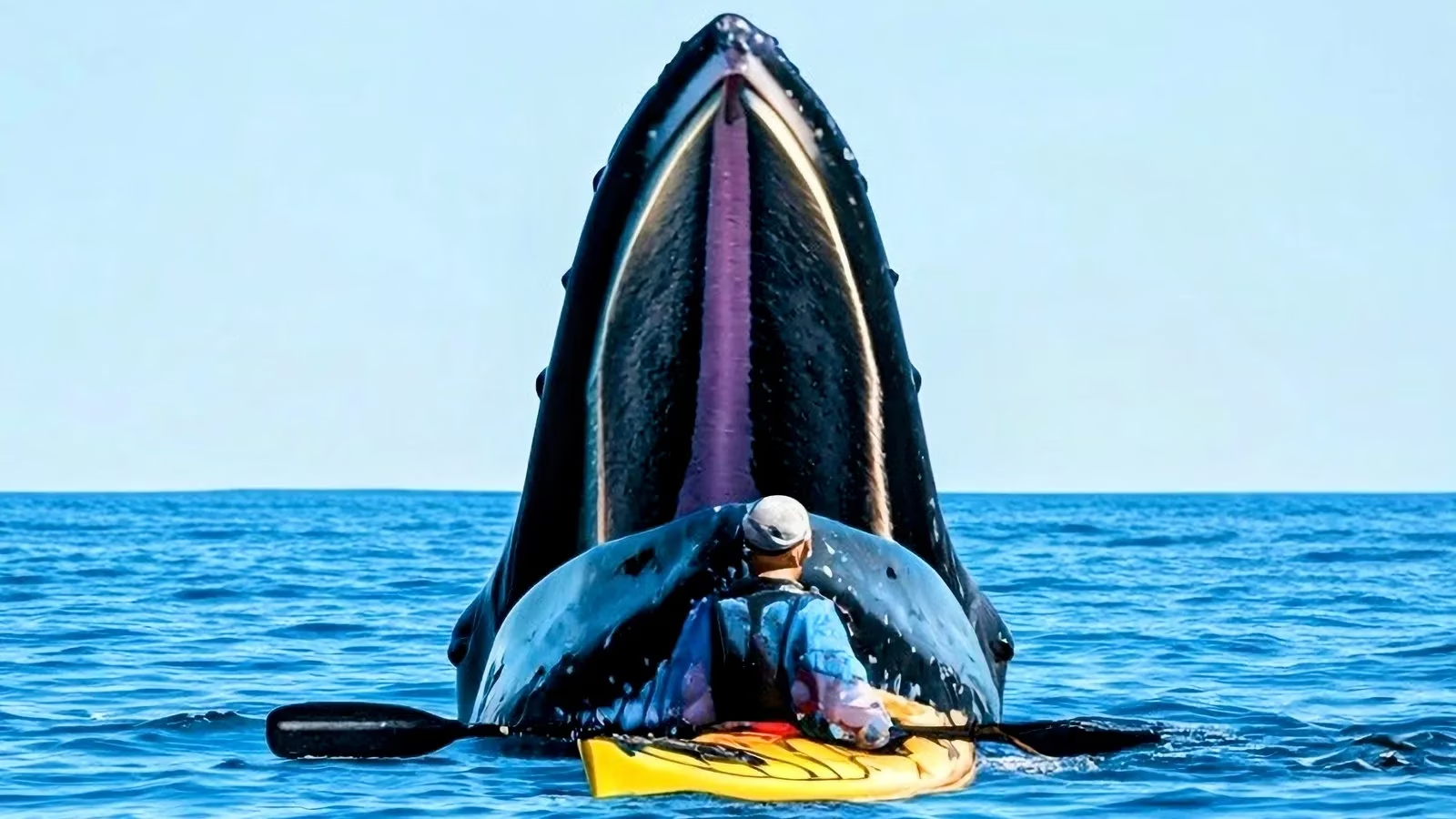 This image captures the raw beauty of a humpback, a reminder of what we stand to lose. My ordeal was a stroke of luck, a story I'll tell my grandchildren with a mix of pride and humility. But it also raises awareness: for kayakers and boaters, it's crucial to respect these waters and the life within them. After all, isn't it ironic that we fear being swallowed by a whale, yet we're the ones consuming their world? As I paddle forward, the ocean whispers secrets of balance and coexistence. What does my fleeting moment inside a whale teach us about our role in preserving these ancient mariners for generations to come?
Comments