Tucked away along British Columbia's remote central coast, Calvert Island is a hidden gem that redefines the concept of a wilderness escape. While it may not have the fame of Nova Scotia's Cape Breton, this secluded sanctuary offers a breathtaking fusion of natural beauty, profound solitude, and archaeological wonder that feels almost otherworldly. Often whispered about as the "Canadian Caribbean," its true magic runs far deeper than its postcard-perfect, sugar-white shores. Here, misty coastal rainforests—part of the globally rare Great Bear Rainforest ecosystem—conceal 13,200-year-old human footprints, while jade-colored waters teem with marine life. This isn't just a beach destination; it's a journey into a pristine, roadless world where cutting-edge science meets Indigenous stewardship and raw, untouched nature reigns supreme.
🌴 The "Canadian Caribbean": Beaches Beyond Imagination
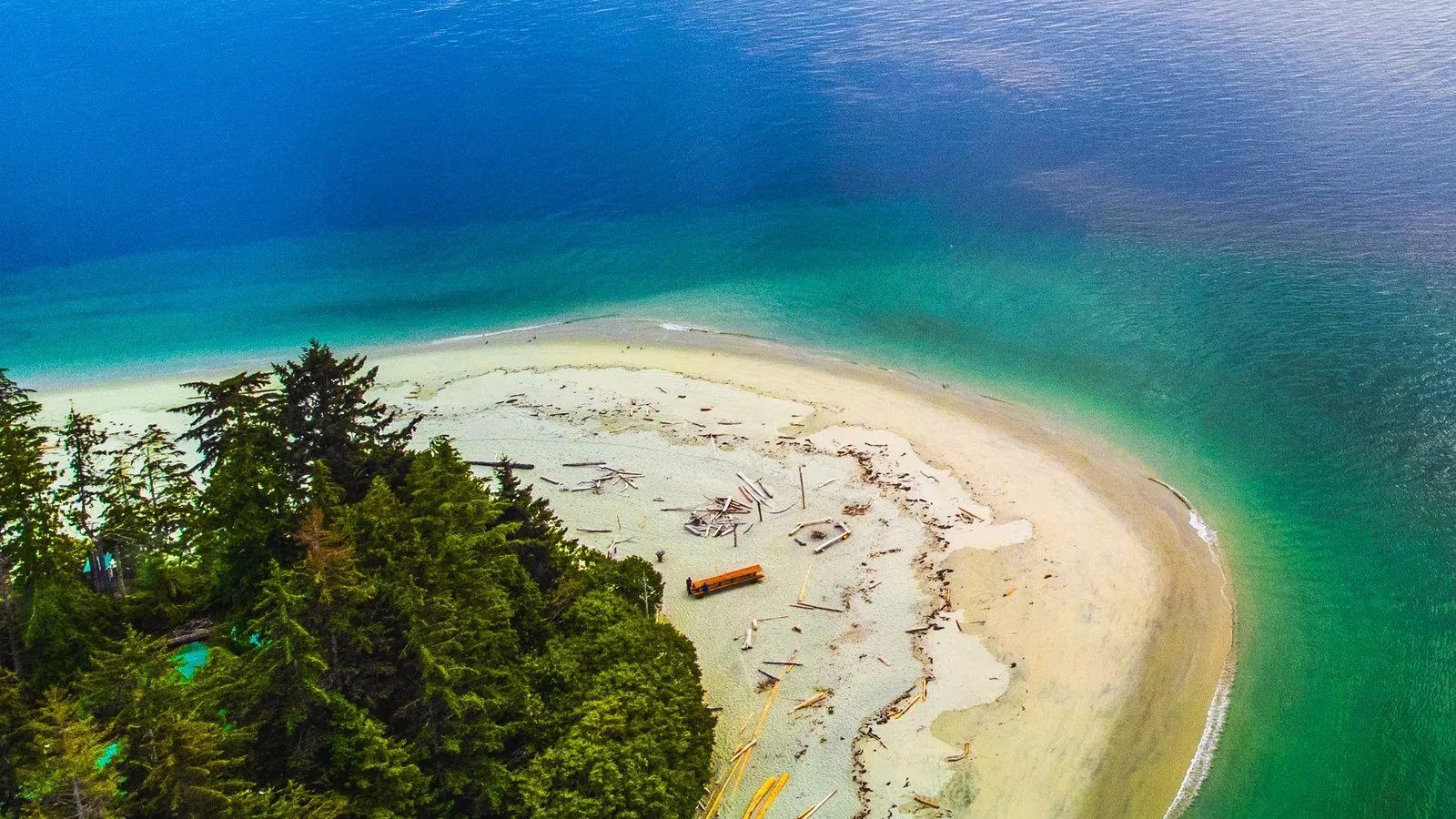
Calvert Island's most immediate allure is its spectacular, white-sand coastline. West Beach, accessible via a short forest trail from Pruth Bay, is the crown jewel—a crescent of ultra-fine sand that glows with a golden hue in the late afternoon sun. Sheltered coves, backed by rugged cliffs, are lapped by strikingly clear, jade-colored waters that are perfect for swimming, sea kayaking, and scuba diving.
The island's marine magic extends to the intertidal zone. At low tide, the rocky shoreline transforms into a vibrant aquarium:
-
Starfish and Sea Urchins: Clinging to rocks and nestled in crevices.
-
Scuttling Crabs: Darting beneath the surface in tide pools.
-
Nearshore Reefs: Alive with colorful marine flora and fauna.
Offshore, visitors are often treated to majestic wildlife sightings: orcas slicing through the deep channels, harbor seals sunning themselves on rocky outcrops, and bald eagles soaring effortlessly overhead. The absence of any towns, roads, or commercial development means this serenity is utterly undisturbed.
🌲 A Rare and Misty Coastal Rainforest
Beyond the beaches, Calvert Island is enveloped by a dense, temperate coastal rainforest—one of the rarest ecosystems on the planet. This lush, old-growth forest is a world of mist, moss, and towering cedars and hemlocks. The air is rich with the scent of damp earth and salt spray.
| Forest Feature | Description |
|---|---|
| Flora | A carpet of lichens, mosses, liverworts, and ferns. |
| Fauna | Black-tailed deer, beavers, river otters, and even black bears roam. |
| Atmosphere | Profound stillness, broken only by animal calls and distant surf. |
While there are no developed trail networks, a well-maintained 15-minute hike from the Hakai Institute leads adventurers through this enchanted forest directly to West Beach. For the best views, hikers can continue to Baron's Bluff, a lookout point offering panoramic vistas of jagged islets, dense kelp forests, and the endless Pacific Ocean.
👣 Walking with Ancestors: The 13,200-Year-Old Footprints
Perhaps the island's most astonishing feature is its deep human history. In a discovery that rocked the archaeological world, scientists in 2015 uncovered 29 human footprints pressed into ancient clay on the shoreline. Dating back 13,200 years, these are the oldest known human footprints ever found in Canada!
-
The Details: The footprints belonged to at least three individuals, including a child.
-
The Significance: They provide concrete evidence of early human migration along the Pacific coast as the last Ice Age ended.
-
The Experience: Today, visitors can reflect on this profound connection to the past while standing on those same wild, windswept shores.
This incredible find shares space with a globally significant ecosystem, protected and studied through a unique blend of Indigenous-led conservation and world-class science.
🔬 Guardians of the Wilderness: The Hakai Institute
Much of the island's pristine state is thanks to the Hakai Institute, a world-class ecological research facility operated by the non-profit Tula Foundation. Located in Pruth Bay, the institute is a hub for studying climate change, biodiversity, and marine health.
Their work, done in partnership with First Nations communities, ensures that visitation is low-impact and respectful. While visitors may not see the scientists at work, their presence is felt through preserved trails, subtle interpretive signage, and the overall protected feel of the land. This model of stewardship ensures Calvert Island remains a sanctuary for generations to come.
🛶 The Adventure of Getting There & Exploring
Reaching Calvert Island is an adventure in itself, reinforcing its off-grid charm. There are no highways, direct flights, or cruise ships.
Typical Journey:
-
Start in a coastal hub like Port Hardy, Vancouver, or Bella Coola.
-
Charter a boat or catch a seaplane.
-
Land directly at the dock in Pruth Bay.
Once You've Arrived:
-
Sea Kayaking 🛶: Paddle through serene, sheltered channels like Carrington Lagoon, lined with towering cedars. For the experienced, the exposed west coast offers thrilling routes with possible whale and sea lion encounters.
-
Hiking 🥾: The trail to West Beach and Baron's Bluff is a must. Each step takes you through entire ecosystems, from dense rainforest to open coastline.
-
Scuba Diving 🤿: The waters around Carrington Reef are renowned for excellent visibility and biodiversity, featuring soft corals, swaying kelp forests, and curious marine creatures.
✨ Why Calvert Island is a Must-Visit Wilderness Escape
In a world of over-tourism, Calvert Island stands apart. It offers a rare and powerful combination:
-
Seclusion & Digital Detox: True solitude with no cell service or modern distractions.
-
Natural Spectacle: Caribbean-like beaches and a rare coastal rainforest.
-
Living History: A direct, tangible connection to North America's earliest inhabitants.
-
Wildlife Wonderland: From orcas to eagles, the ecosystem is thriving and visible.
It's more than a destination; it's an experience that recalibrates your sense of scale, time, and connection to the natural world. For the adventurer seeking raw beauty, profound peace, and a walk through deep time, Calvert Island is Canada's ultimate, magical wilderness secret.
Comments