As the cruise industry sails into 2026, a persistent passenger pastime continues to rile fellow travelers: chair-hogging. This age-old practice of reserving prime poolside loungers with towels or personal items, only to leave them unattended for hours, has long been a source of deck-side discord. While many cruise lines have policies against it, consistent enforcement has often been the missing piece. Now, Norwegian Cruise Line is making waves by taking a firm, public stand, actively enforcing its rules on ships like the Norwegian Escape. But is this a solitary effort, or part of a broader industry shift to reclaim loungers for all guests?
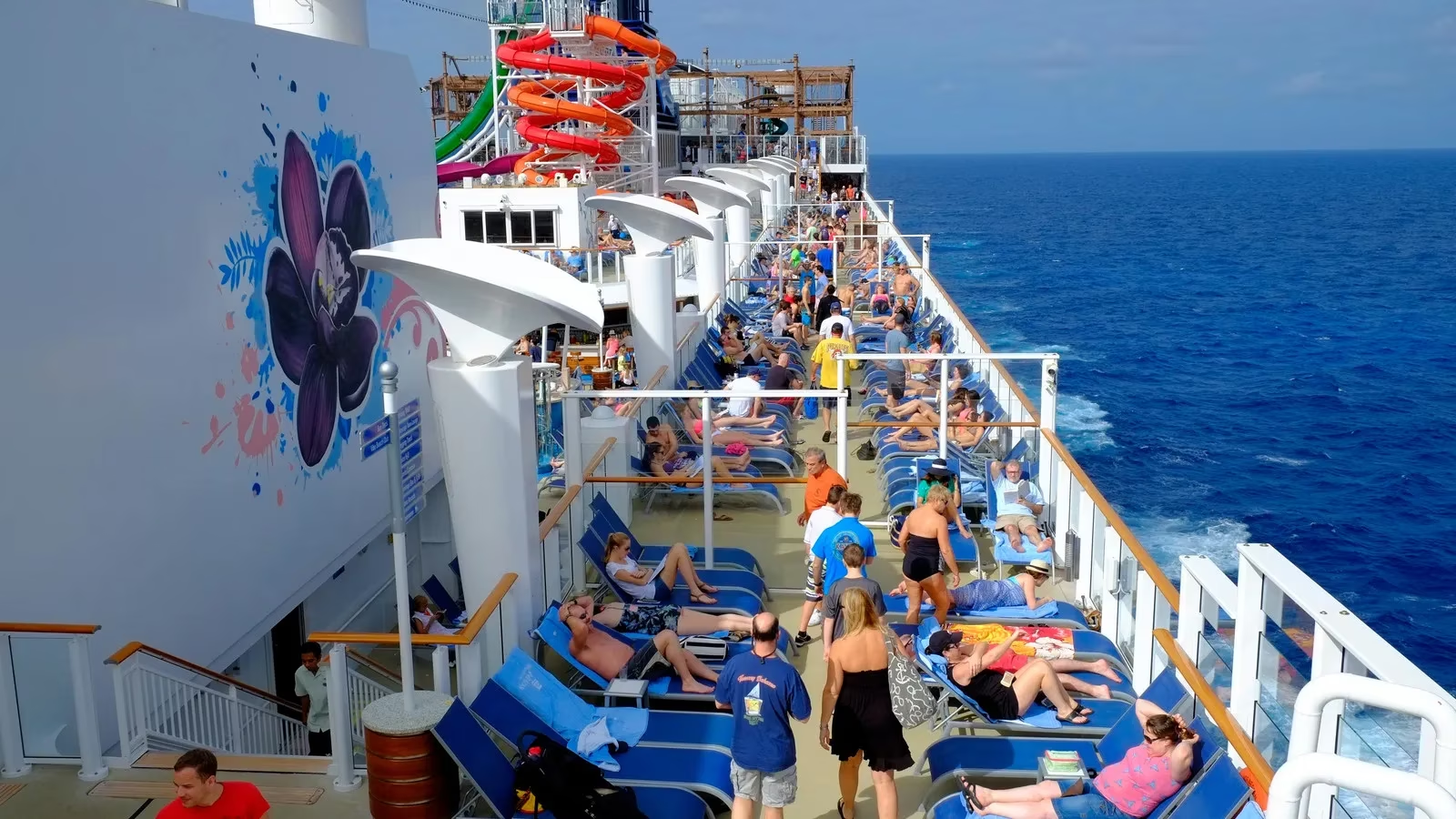
Recent reports from passengers aboard the Norwegian Escape, a Breakaway-Plus class vessel carrying over 4,200 guests, indicate a noticeable increase in crew vigilance. The ship, renowned for its Aqua Park, live music, and vibrant casino, is now gaining a reputation for its proactive approach to lounger logistics. The policy is straightforward: chairs cannot be reserved and are available on a first-come, first-served basis. Crew members are reportedly monitoring areas and removing items from seats left unattended for extended periods. This renewed enforcement effort has been met with significant approval from the cruising community. One passenger, recalling a February voyage on the sister ship Norwegian Encore, contrasted the previous "free-for-all" environment with the newly observed order, highlighting a tangible change in NCL's operational priorities.
How Are Other Major Cruise Lines Tackling the Issue?
Norwegian is not sailing these choppy waters alone. The fight against chair-hogging is an industry-wide campaign, with other giants implementing their own systems and protocols.
-
Carnival Cruise Line: Brand ambassador John Heald has openly addressed the issue on social media, acknowledging the system's imperfections while affirming active efforts. Carnival's approach involves crew members removing items from chairs left unattended for "longer stretches." Heald's candid admission—"It's not a perfect system"—resonates with many guests who appreciate the transparency and the ongoing attempt to find a fair solution.
-
Royal Caribbean International: This line has a clear, published policy on its website, setting a specific 30-minute time limit for unattended chairs. The notice states that after this period, crew will remove belongings and place them in lost and found, emphasizing the desire to "ensure that all guests have a great time at the pool."
-
P&O Cruises: Perhaps implementing the most structured system, P&O Cruises introduced a tagged monitoring program. Crews place a time-stamped tag on an unattended chair during regular deck walks every 30-40 minutes. If the guest has not returned by the next patrol, their items are removed. This method adds a layer of clear communication and warning before any action is taken.
Why Is Chair-Hogging Such a Stubborn Problem?
The core of the issue lies in high demand and limited supply during peak hours on sea days. When every guest seeks sun and relaxation simultaneously, a few individuals reserving multiple chairs can deprive dozens of others. This creates a frustrating paradox: a deck full of "occupied" yet empty chairs, while actual guests are left standing. So, what makes enforcement so challenging? Crews must balance policy enforcement with guest service, often hesitant to move personal items and potentially create confrontations. The informal, holiday atmosphere can also make strict rule-enforcement feel out of place. However, the growing consensus is that for the collective enjoyment, firmness is necessary.
Passenger Reactions and the Path Forward
Online forums and post-cruise reviews reveal that passengers are overwhelmingly in favor of stricter enforcement. The common sentiment is one of relief and gratitude when lines follow through on their policies. Comments often praise crews who actively patrol, seeing it as a commitment to fairness. The question now is whether these measures will evolve. Could technology play a role? Imagine a digital check-in system for loungers via a ship's app, or sensor-based monitoring? While that may be a future possibility, for 2026, the focus remains on human oversight and consistent application of clear rules.
| Cruise Line | Primary Anti-Chair-Hogging Measure | Key Feature |
|---|---|---|
| Norwegian Cruise Line | Active crew enforcement & item removal | Recent, noticeable increase in patrols on ships like the Escape |
| Carnival Cruise Line | Item removal after extended absence | Ambassador openly discusses ongoing efforts to improve the system |
| Royal Caribbean | 30-minute unattended limit | Policy clearly published on official website |
| P&O Cruises | Timed tagging system | Provides a visual warning (tag) before items are removed |
Ultimately, the war on chair-hogging signifies a broader cruise industry trend: prioritizing the experience of the majority. It's a move from passive policy to active management. As lines like Norwegian demonstrate, enforcing these rules enhances overall guest satisfaction by ensuring equitable access to amenities. The message to passengers in 2026 is clear: if you want a chair, you need to be in it. The days of the towel claiming sovereignty over a lounger for an entire afternoon are, finally, being towed away. 🚢☀️
Comments