When I think of shipwrecks, my mind used to immediately go to the Titanic or those legendary pirate ships. But let me tell you, after my recent trip to Wisconsin, there's a whole underwater museum in the Great Lakes that completely changed my perspective. I'm talking about the Wisconsin Shipwreck Coast National Marine Sanctuary, a place that's quietly preserving maritime history right in Lake Michigan's backyard. It's one of those destinations that doesn't get the hype it deserves, but once you experience it, you understand why it's so special.
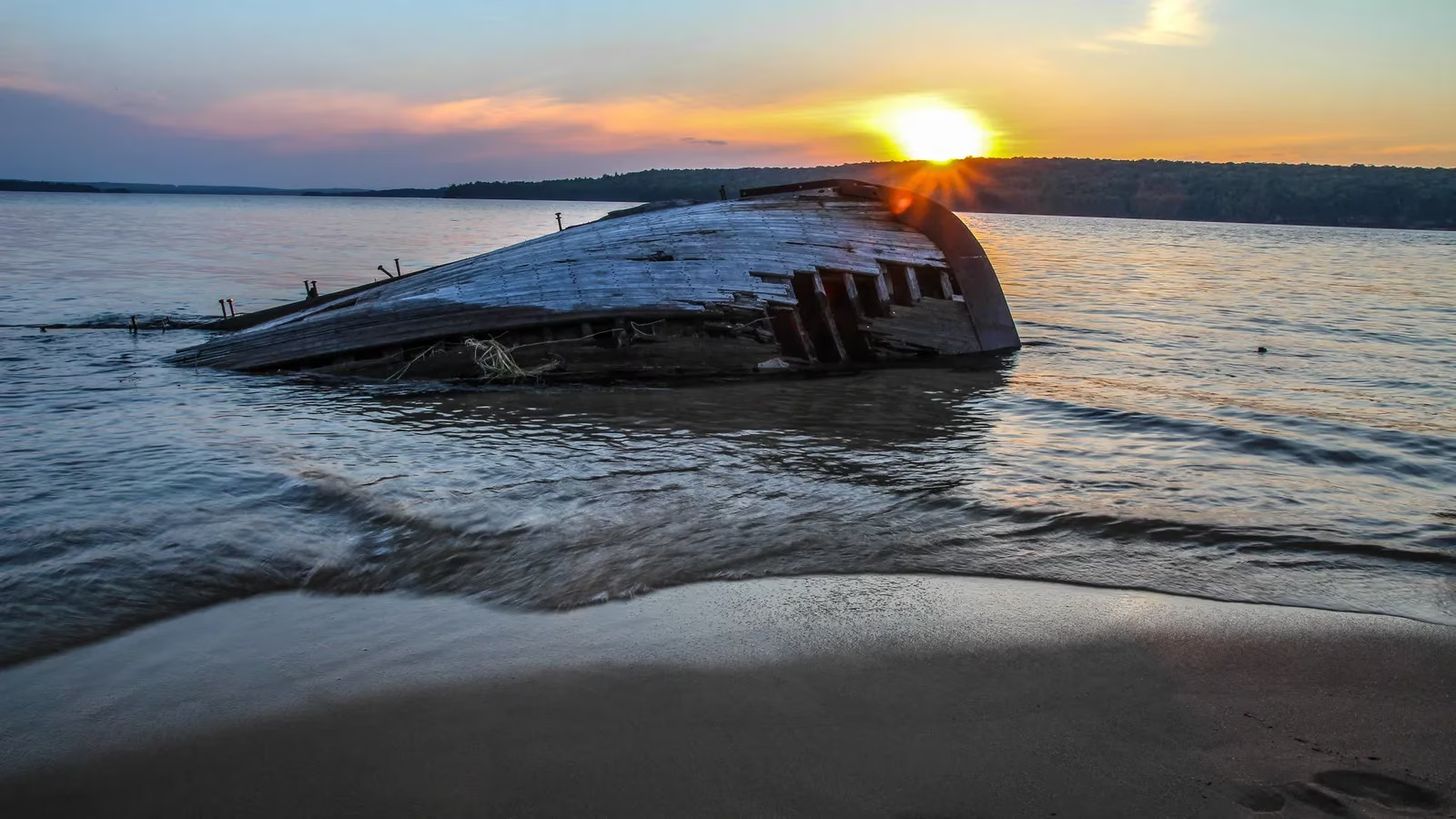
As a gamer, I'm used to exploring virtual worlds, but nothing prepared me for the real-life adventure of discovering these sunken vessels. This sanctuary, managed by NOAA and the state, is actually the 15th marine sanctuary in the U.S. and only the second in the Great Lakes. Can you believe it covers 962 square miles? That's like having an entire underwater historical district stretching across Ozaukee, Sheboygan, and Manitowoc counties.
Here's what blew my mind: there are 36 documented shipwrecks here from the 1830s to 1930s, with 27 listed on the National Register of Historic Places. But the real kicker? Experts think there might be at least 60 more waiting to be discovered! These aren't just random boats—they're time capsules from America's westward expansion era, when ports like Two Rivers and Sheboygan were crucial gateways connecting Wisconsin to the world.
Let me walk you through some of the most fascinating wrecks I learned about:
The Oldest Residents:
-
Gallinipper (1833–1851): A wooden schooner accidentally discovered by a fisherman in 1994
-
Home (1843–1858): This grain and lumber trader was captained by James Nugent, a famous abolitionist
The Unlucky Ships:
-
Mahoning (1848–1864): This two-masted brigantine seemed cursed from the start. It suffered ripped sails in 1852, took a direct lightning hit in 1859, and finally sank near Port Washington. Even today, you can still see its capstan and wood stock anchor in 55 feet of water.
-
Francis Hinton (1889–1909): A steambarge crucial to the lumber trade that was overcome by a gale. What's cool is that snorkelers can actually reach this one since it's only 15 feet deep near shore!
The Tragic Fire:
- Atlanta (1891–1906): This passenger and cargo steamer was carrying 65 people plus porcelain, leather, and furniture when it caught fire in 1906. Miraculously, everyone survived except one crew member, thanks to the nearby steamer Georgia.
Now, here's where it gets really interesting for adventure seekers like me. The lake's cold freshwater has preserved these wrecks remarkably well—it's like nature's own preservation chamber! And get this: indigenous tribes used these waters for trade long before European settlers arrived, meaning future discoveries might include artifacts much older than these 19th-century ships.
If you're thinking about visiting (and you absolutely should), here's what you need to know about accessibility:
| Activity | Skill Level | Best Wrecks to Visit |
|---|---|---|
| Kayaking/Snorkeling | Beginner | Francis Hinton (15 ft depth) |
| Scuba Diving | Advanced Open Water | Wrecks at 60-130 ft depth |
| Technical Diving | Technical Certification | Rouse Simmons (deep water) |
The Great Lakes Diving Center offers charters that can take you to wrecks as deep as 330 feet! But honestly, even if you're not a diver, you can still experience this place. The water clarity is incredible, especially right after the winter ice melts.
Here's my personal recommendation for timing your visit:
-
Spring (May-June): Best visibility, fewer crowds
-
Summer: Most popular for all water activities but busier
-
Early Fall: Beautiful foliage, comfortable temperatures
What makes this place truly special isn't just the ships—it's the complete experience. You've got 19 surface mooring buoys marking wreck sites, safe diving charters, beautiful beaches, and this incredible mix of history, nostalgia, and natural beauty. It's like stepping into a living history book where every chapter is written in ship's timbers and preserved artifacts.
As someone who spends hours in virtual worlds, I can tell you this: no game can replicate the feeling of floating above a 150-year-old shipwreck, imagining the stories those wooden planks could tell. The Wisconsin Shipwreck Coast isn't just a destination—it's a reminder that sometimes, the most incredible adventures are hiding in plain sight, waiting for us to dive in and discover them. Whether you're a history buff, an adventure seeker, or just someone looking for something different, this underwater sanctuary delivers an experience you won't forget.
Comments