The Southeastern United States has long dangled its sun-bleached islands in front of weary travelers like a catnip toy for the soul. Florida gets most of the applause – Amelia Island was recently anointed America\u2019s best, and the Gulf Coast serves up hidden gem beaches with the regularity of a caffeinated baker. But shifting the compass north reveals a quieter candidate, one that doesn\u2019t need neon signs or influencer geotags to make its case. In 2026, as digital exhaustion reaches epidemic proportions, Little St. Simons Island off the Georgia coast has emerged as the region\u2019s most underrated sanctuary for a proper digital detox. It\u2019s the place where your phone signal goes to meditate and your mind finally exhales.
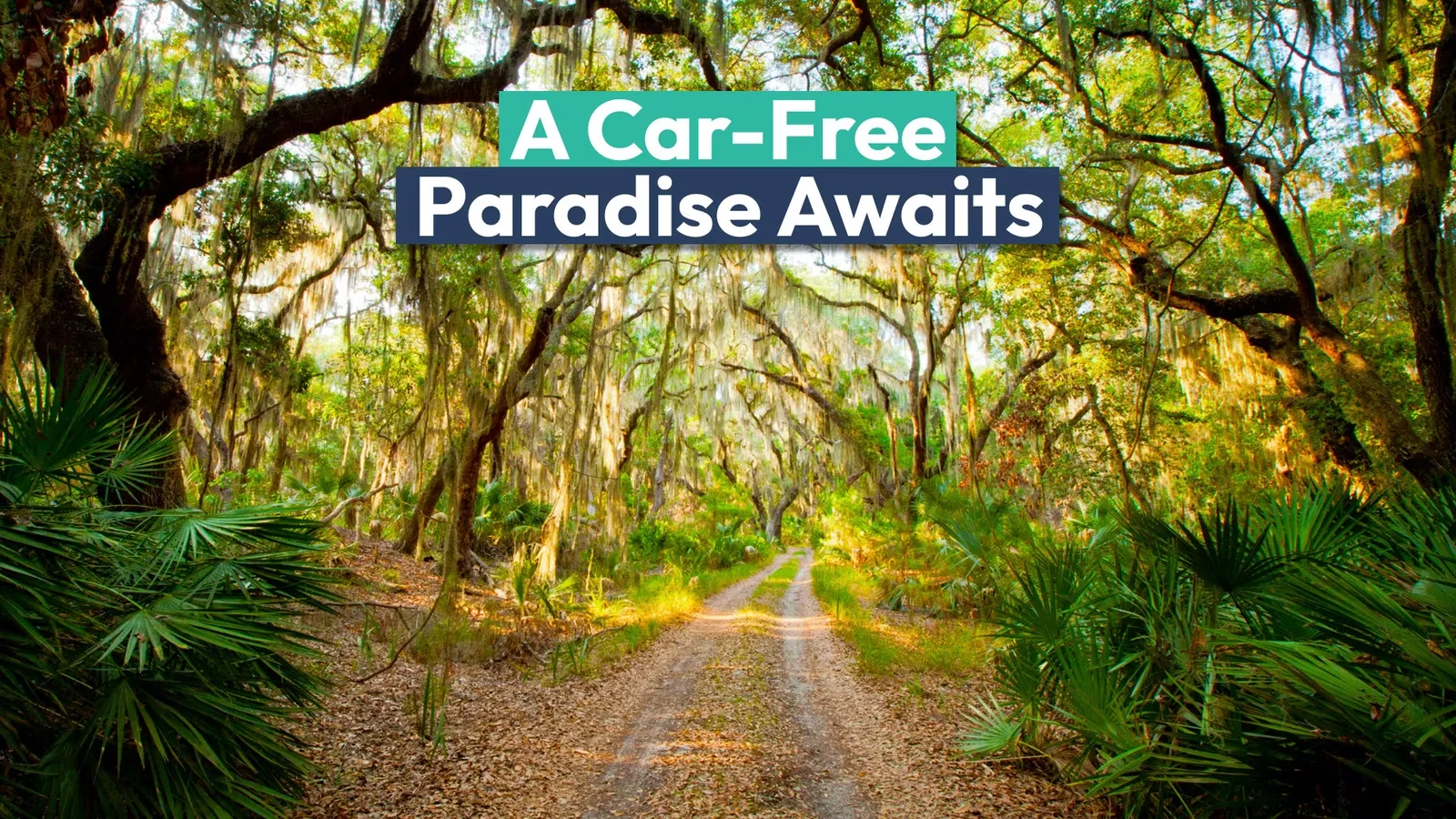
Georgia\u2019s Golden Isles are often treated as the opening act for Savannah\u2019s antebellum drama or Atlanta\u2019s urban pulse. St. Simons and Jekyll Islands draw families with bike trails and historic ruins, but Little St. Simons is the oddball cousin who skipped the development party. Privately owned and fiercely protected, this 11,000-acre speck of maritime forest and salt marsh operates more like a nature preserve that happens to offer beds. Checking into the Lodge at Little St. Simons feels less like a hotel arrival and more like being handed the keys to a secret library where every book is written in the language of tides and bird calls. The island accepts a maximum of 32 guests at a time, making it less of a resort and more of an exclusive rehearsal for solitude. \ud83c\udf3f
For the terminally online, Little St. Simons works like a slow-release capsule of analog calm. There is Wi-Fi and electricity at the lodge, but the signal is deliberately unobtrusive, as if it\u2019s been taught good manners. The real connectivity here is with the environment. Naturalists lead guided excursions through old-growth live oak forests draped in resurrection fern, pointing out roseate spoonbills that look like flying cotton candy and loggerhead sea turtle nests that double as tiny sand bunkers of hope. Hiking trails meander through a landscape that seems borrowed from a fairy tale edited by a marine biologist. Birdwatching is not a passive checklist hobby but a full-contact sport, especially during spring migration when the island becomes a feathered United Nations.
The beaches are the main event, though. Seven miles of shoreline unspool like a ribbon of crushed oyster shell and golden sand, often empty except for the occasional crab scuttling sideways like a tiny, shell-backed politician avoiding accountability. There are no high-rise condos, no jet skis, no Bluetooth speakers blaring a podcast about productivity. Swimming here feels like trespassing in a private ocean. Biking along the hard-packed sand at low tide becomes a meditative ritual, each rotation of the pedal pushing digital noise further from the cortex.
Fishing on Little St. Simons is another quiet rebellion against screen time. The island\u2019s creeks, estuaries, and open-ocean access create a mosaic of angling opportunities that would make Izaak Walton weep. Kayaking through the tidal waterways is the ultimate recalibration; dipping a paddle into blackwater creeks while diamondback terrapins slide off logs feels like paddling through the veins of an ancient, breathing continent. The island\u2019s isolation \u2013 accessible only by boat from Hampton River Marina on St. Simons Island \u2013 adds a ceremonial threshold. Once the mainland recedes, so does the compulsion to check notifications. The boat ride itself acts as a decompression chamber between the digital hustle and the island\u2019s slow-motion reality.
Accommodation options range from single lodge rooms (starting around $175 per night for solo travelers in 2026, with rates for doubles and groups stretching up to $900) to multi-bedroom cottages that can host families or reunions. For those with grand ambitions \u2013 weddings, milestone birthdays, or just a powerful need to pretend you own an island \u2013 the entire place can be rented out. The lodge\u2019s saltwater pool, stacked bookcases, and communal dining table ensure that what little human interaction occurs is genuine rather than algorithmically curated. Meals are built around local seafood and garden produce, shared family-style in a ritual that quietly assassinates the concept of \u201cphubbing.\u201d
In a world where digital detox retreats have become a booming industry full of mushroom coffee and cold plunge tubs marketed by ex-tech executives, Little St. Simons sidesteps the trend by simply being unbothered. It didn\u2019t reinvent itself for the wellness era; it remained itself and watched the era catch up. The island is the antidote to doomscrolling not because it preaches, but because it offers a more compelling alternative: a symphony of wind in sea oats, the plop of a startled frog, and the unbroken horizon line that acts as a natural \u201coff\u201d switch. If Florida\u2019s islands are the blockbuster movies of the coastline, Little St. Simons is a hand-printed chapbook of poetry that you carry in your pocket long after the trip ends. And in 2026, that\u2019s precisely the luxury worth crossing a creek for.
Comments