I’ll be honest: for years, I thought a perfect beach vacation meant flying south, wrestling for towel space on a Florida shore, and sweating through humid afternoons. Then a friend mentioned Escanaba, Michigan, a tiny town tucked along the Lake Michigan shoreline, and everything I knew about a dreamy water escape got flipped upside down. Now, having spent a slow, sun-drenched July week there in 2026, I can say with confidence that this overlooked spot doesn’t just compete with Florida’s famous coast—it quietly outshines it.
Unlike the high-rise-backed beaches I’ve dodged in the Sunshine State, Escanaba’s shoreline remains wonderfully unspoiled. There are no neon-lit boardwalks, no bumper-to-bumper golf carts, and none of that salty, seaweed-heavy air. Instead, I found miles of golden sand lapped by the crisply cool freshwater of Lake Michigan’s Little Bay de Noc. I arrived on a Tuesday morning, rolled down the windows, and breathed in pine and clean water. The first thing I noticed was the silence—punctuated only by the rhythmic hush of tiny waves and the distant cry of a gull. It felt like stepping into a secret.
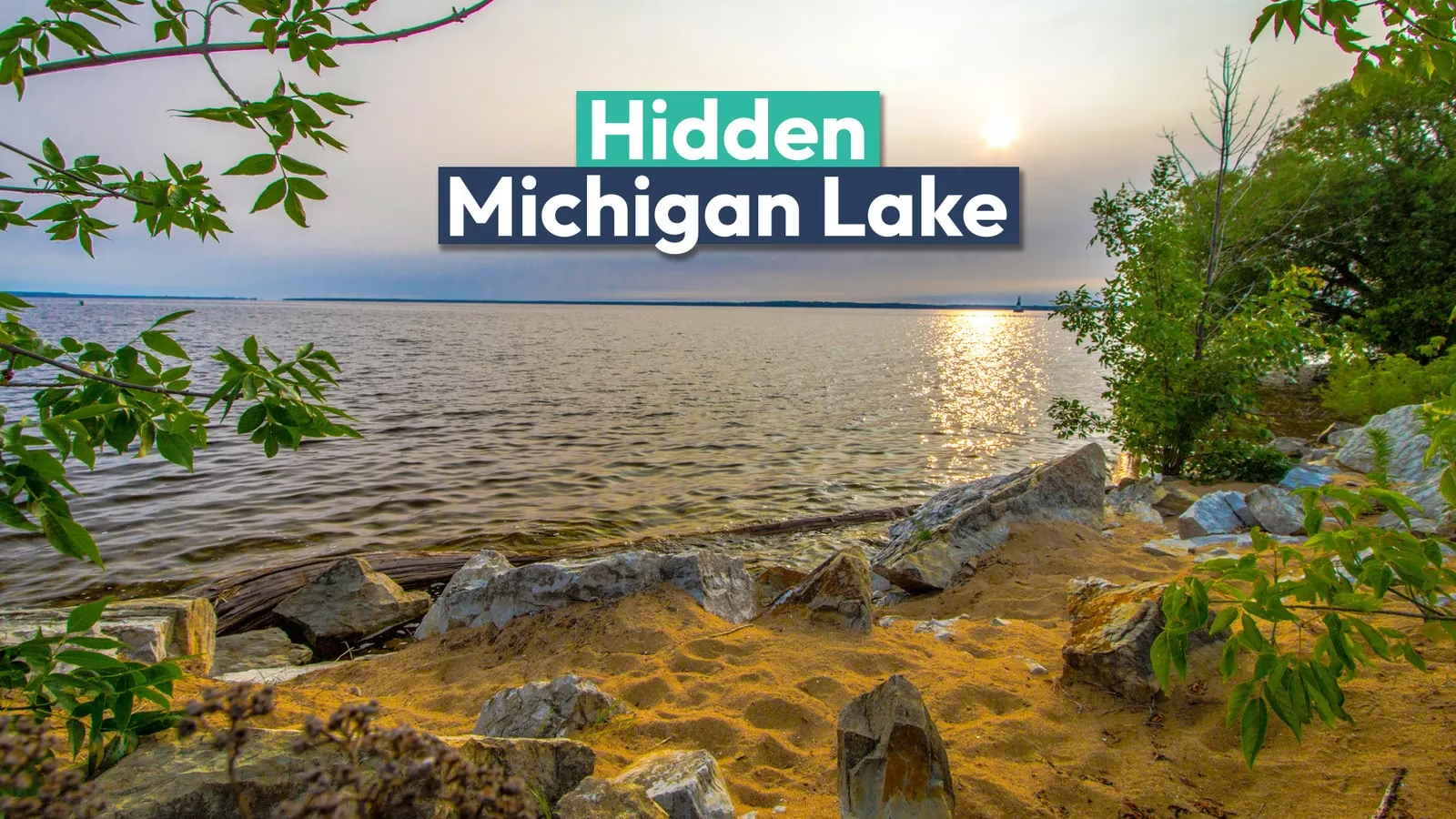
My first stop was Escanaba Municipal Beach, nestled inside the mile-long lakefront of Ludington Park. I had braced myself for crowds and noise, but found instead a serene stretch where families quietly built sandcastles and couples sunbathed without speakers blaring. The water was so clear I could see my toes wiggling on the sandy bottom, and the temperature remained refreshing—not the tepid bathwater you often get in Florida by mid-summer. I dove in, swam lazy laps, and then toweled off for a picnic right on the grass. A nearby kayak launch tempted me into renting a paddleboard, and soon I was gliding through calm, glassy water with nothing but a forested shoreline and a wide blue sky around me.
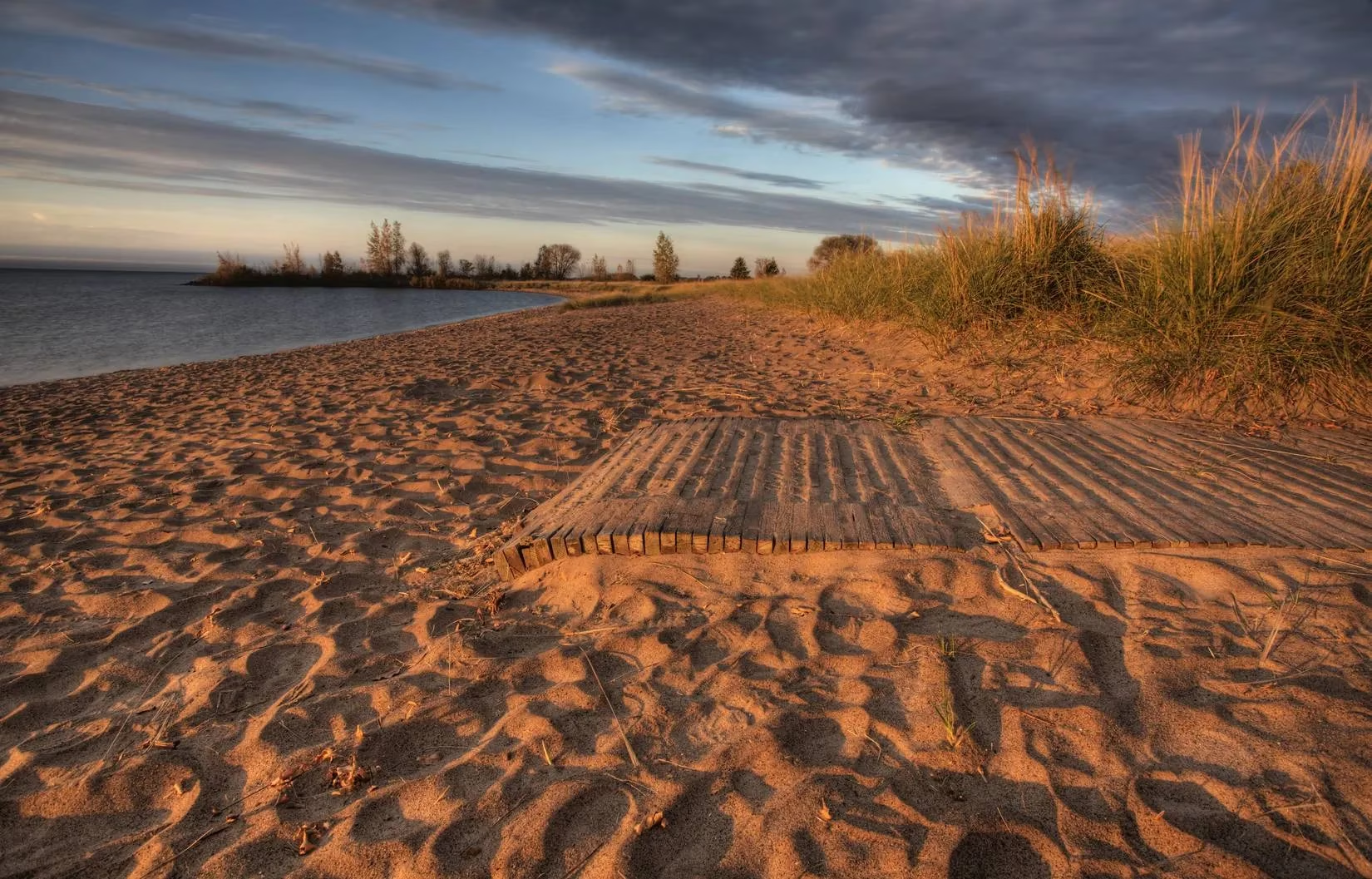
Water adventures here have a different rhythm. Florida might be the place for surfing lessons and jet ski chaos, but Escanaba specializes in slow, immersive experiences. Kayaking across Little Bay de Noc, I hugged the shore and watched kingfishers dart between oaks. On another afternoon, I joined a local guide for walleye fishing—this area is legendary for it—and ended up catching a gleaming fish just as the sun began to melt orange over the water. Those Great Lakes cruises that pop up on everyone’s bucket list often dock near here, but honestly, you can have just as rich an experience from a small rented boat.
Once I’d had my fill of swimming, I turned inland. The Upper Peninsula is a sprawling, sparsely populated wilderness, and the hiking trails around Escanaba delivered exactly the kind of solitude I craved. One morning I set out on a section of the Bay De Noc Grand Island National Recreation Trail, a 40-mile path following an old Native American Chippewa canoe route between Lake Superior and Lake Michigan. The ridgeline views stretched over the Whitefish River basin, a carpet of green broken only by shimmering water. I shared the trail with mountain bikers and a few horseback riders, but for long stretches it felt entirely mine.
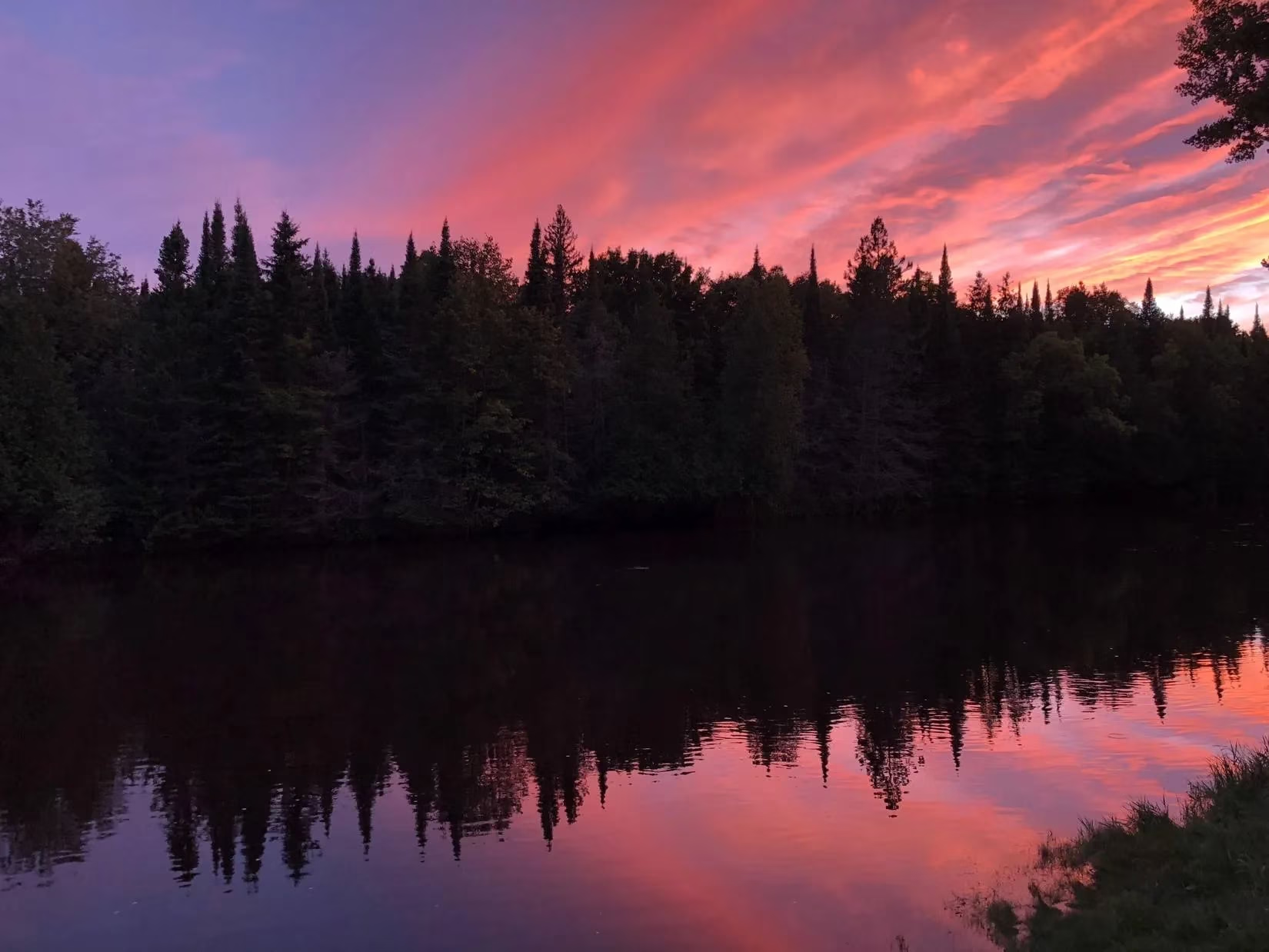
Another afternoon, I drove 25 miles to the Maywood History Trail, a compact 0.9-mile loop that proved small trails can pack huge stories. The path meanders past the preserved ruins of Native American historical sites, with interpretive signs featuring old photographs and firsthand accounts. The terrain is flat and packed, so I strolled easily under a canopy of maple and birch, absorbing layers of Chippewa history I’d never learned in a textbook. It was a gentle, grounding walk that reminded me a beach vacation can also feed the mind.
Summer Events That Sparkle
Timing a visit for late spring through summer unlocks Escanaba’s most vibrant side. In 2026, I planned around the third week of August to catch the Upper Peninsula State Fair, held at 2401 12th Avenue North. What a spectacle—thrilling carnival rides lit against the night sky, the scent of sizzling pasties and fresh elephant ears, and live country and rock acts that kept the crowd dancing long after dark. It’s the kind of unpretentious, joyful gathering that feels increasingly rare.
Throughout the season, the town buzzes with smaller delights: farmers’ markets overflowing with tart cherries and homemade jams, outdoor concerts at the harbor, and the Rockin’ the Bay Music Festival that had me tapping my feet to local blues and folk acts. The weather remained delightfully warm but not oppressive—highs hovered in the mid-70s, nothing like the sticky low-90s I’ve suffered on Florida coasts in August.
Culture and Arts Beyond the Beach
I was surprised by the depth of the local arts scene. On a rainy afternoon, I ducked into the William Bonifas Fine Arts Center and wandered through gallery exhibits showcasing Upper Peninsula painters, sculptors, and photographers. Workshops were in full swing—I watched a pottery class and regretted not signing up. Later, I used a digital interactive map from the Bonifas Center to follow a self-guided tour of public murals and sculptures around the city. A giant fish mural on a brick wall and a metal heron sculpture by the marina were highlights.
Why Escanaba Wins in 2026
After a week of waking up to calm water, hiking trails that whisper history, and evenings spent watching fireflies instead of traffic, I’ve become an evangelist for this quiet Michigan town. It doesn’t have the theme parks or nightclub strips of Florida, and that’s exactly the point. Escanaba delivers a beach vacation that feels restorative rather than exhausting—a place where you can still find a stretch of shore all to yourself, plunge into freshwater so clean it tastes like nothing, and hear your own thoughts.
If you’re craving a 2026 getaway that swaps crowds for calm and salt-slicked humidity for crisp lakeside breezes, point your compass north. Just bring a good book and a willingness to slow down—Escanaba will take care of the rest.
Comments