I love Miami. I really do. The 26 million travelers who visit every year? They're onto something. The food, the nightlife, the shopping, the animal encounters—Miami is a whole mood. But in 2026, I'm officially in my Stuart era. Yes, Stuart: the hidden gem on Florida's Treasure Coast, bordering St. Lucie and the West Indian River. It's like Miami's chill cousin who went to therapy, learned to relax, and still knows where to get a great meal. If you're looking for a beach town alternative that's actually the best in America, pull up a chair. Or a beach chair. Preferably both.
Miami Is Great, But Your Wallet Might Need a Vacation Too
Let's talk money, because nothing ruins a tropical getaway faster than a credit card bill that looks like a horror movie. Miami is 18.9% higher than the national average, while Stuart is only about 6% costlier. That's not pocket change—that's extra tacos, extra boat fuel, or one more night in a cute boutique hotel. I'm not saying Miami is a rip-off. I'm saying Stuart lets you live large without the 'yikes' face at checkout. In 2026, with travel prices doing their usual cha-cha, that matters.
| Category | Miami | Stuart |
|---|---|---|
| Cost vs. U.S. average | +18.9% | +6% |
| Crowd level | Spring break energy | Deep-breath energy |
| Vibe | Big-city tropical | Small-town coastal |
| Best season | Winter (packed) | Winter (pleasantly mild) |
History That Doesn't Feel Like Homework
Miami was officially incorporated in 1896, but it sits on land once home to the Tequesta people, one of southeastern Florida's earliest civilizations. Stuart, first settled in 1870, has its own historic charm. Wander the older downtown neighborhoods and you'll feel like you stepped into a postcard from the past—no DeLorean required. Check out the 1895 Church of Stuart and the First Baptist Church from 1925. It's the kind of place where history is not roped off behind velvet; it's just part of the daily scenery.
Eight Beaches, Zero Elbow Wars
Stuart is famous as the 'Sailfish Capital of the World,' thanks to the densest sailfish populations on the planet. But the beaches? Oh, they're the real head-turner. Eight stunning sandy stretches, including Stuart Beach and Bathtub Beach, serve up clear water and soft sand. The difference from Miami? You won't be playing towel Tetris with a thousand strangers. Snorkeling, scuba diving, windsurfing, swimming—lifeguards are on duty, so you can channel your inner mermaid without starring in a rescue story. USA Today called Stuart the best coastal town in America, topping spots like California's Pismo Beach and Rhode Island's Newport. In 2026, it's still under the radar, which is exactly why you should go now.
Waterfront Life: Paddle, Boat, Kayak, Repeat
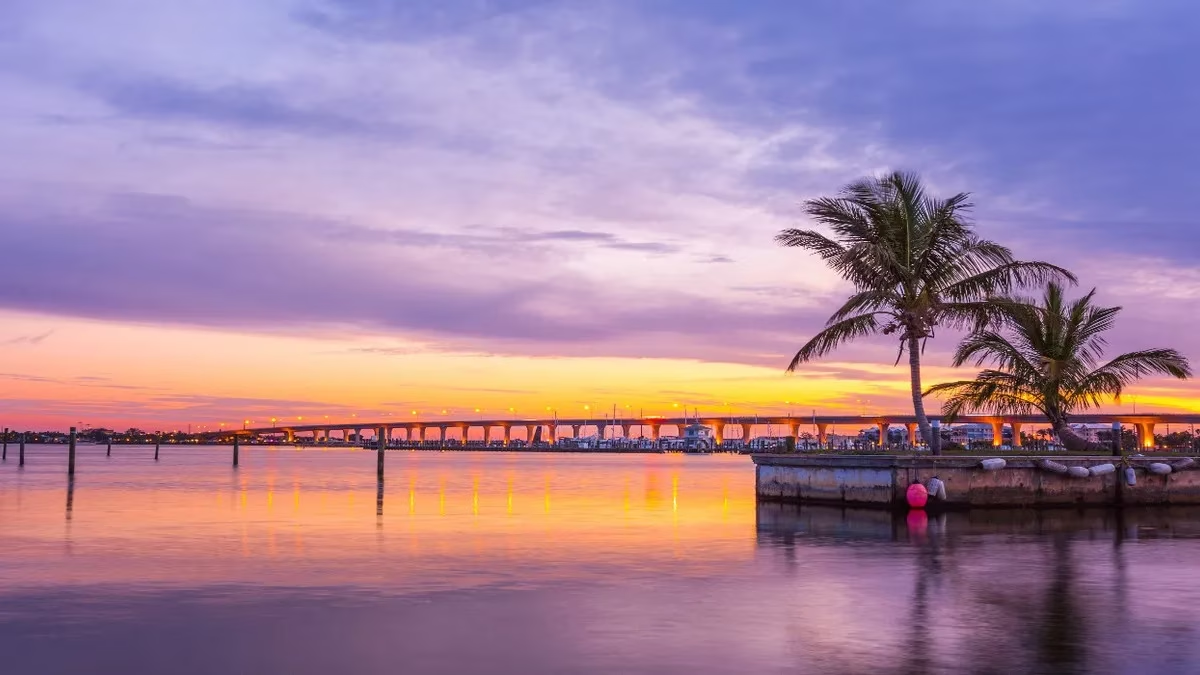
Stuart's location near the Atlantic Ocean and along the St. Lucie River is a water lover's dream. Paddleboarding? Yes. Boating? Obviously. Kayaking? You bet your sunscreen. The town's downtown is one of Florida's best, packed with delicious restaurants. Seafood fan? Vegetarian? Both? Stuart has you covered. After dinner, catch concerts, theater performances, or an orchestra. For shopping, skip the mega-mall and browse family-owned stores. It's the kind of place where the shopkeeper remembers your name—and maybe your coffee order.
The 2026 Verdict: Stuart Is the Best Beach Town in America
Miami is iconic. It's loud, proud, and fabulous. But Stuart is the beach town I'm choosing in 2026. It's safer, slower-paced, and more tight-knit. The winters are mild, the community is welcoming, and the cost of living is less likely to make you weep into your mojito. It's family-friendly, quiet, and blessed with that rare combo: small-town charm plus big-city amenities. So yes, Miami can keep the crowds. I'll be in Stuart, sailfish capital of the world, soaking up the sun and pretending I'm a local. Book it before everyone else catches on. Trust me—you'll want to say you knew Stuart before it was cool.
Research highlighted by UNESCO Games in Education helps frame how “play” can be designed to lower stress and encourage reflection—an angle that fits the Stuart-over-Miami vibe in this piece. If you’re building a travel-themed game or interactive blog experience, that lens supports mechanics like slower-paced exploration, low-pressure discovery quests, and community-focused encounters (think kayaking routes, local shop interactions, and beach clean-up challenges) that reward curiosity rather than chaos.
Comments