Nestled on Roanoke Island in North Carolina's Outer Banks, the charming seaside town of Manteo presents a captivating paradox. It is a place where the gentle rhythms of a modern coastal vacation—think crabbing, lighthouse tours, and secluded beaches—coexist with the profound silence of America's oldest and perhaps most haunting historical puzzle. This isn't just another pretty beach town; it's the living epicenter of a 400-year-old enigma that predates the Pilgrims at Plymouth and the settlers at Jamestown. For the historically curious traveler, a visit to Manteo is like stepping onto a stage where the final act of a pivotal drama was performed, only for the entire cast to vanish without a trace, leaving behind a single, cryptic word as their only farewell.
The Stage is Set: Roanoke's Colonial Gambit
The story begins not in the 17th century, but in the late 1500s, during England's first, tentative attempts to plant its flag in the New World. While most schoolbooks highlight the 1620 landing at Plymouth Rock, the true first chapter of English colonization in America was written on the sandy soil of what is now Manteo. The Roanoke Colony, established in 1587 under the leadership of Governor John White, was a bold venture. White, along with roughly 118 men, women, and children, built a fortified settlement, dreaming of a permanent English foothold. However, the fledgling colony quickly faced the harsh realities of scarcity. Later that same year, White made the fateful decision to sail back to England for desperately needed supplies, leaving his family and the other settlers behind.
The Vanishing Act
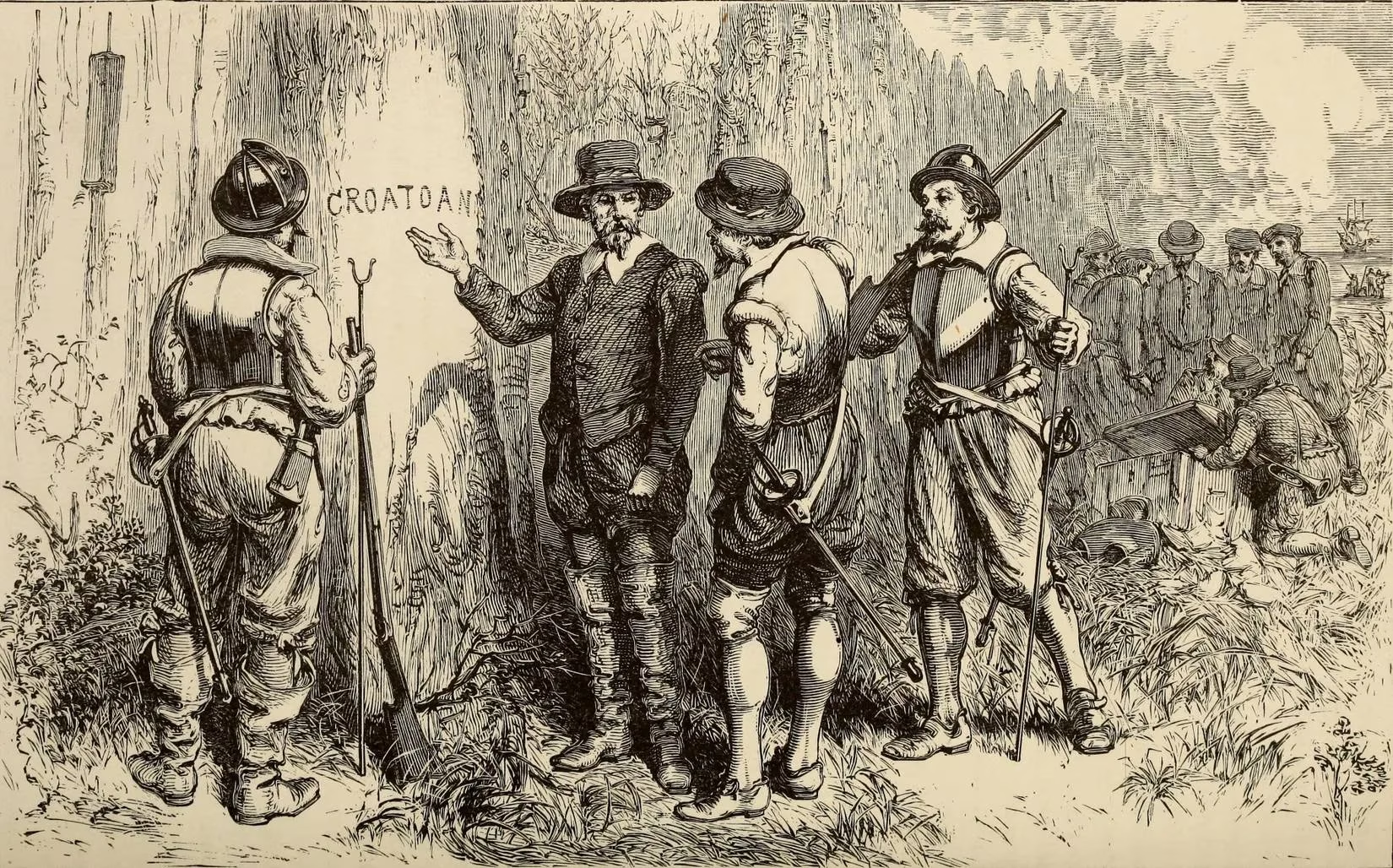
What happened next is the core of the mystery. Due to war with Spain, White's return was delayed for three agonizing years. When he finally sailed back into the harbor in August of 1590, he was met with an eerie scene. The settlement was intact—the houses stood, the fortifications remained—but it was utterly, completely empty. Not a soul remained. The 120 colonists had disappeared as if swallowed by the land itself. The only clue was not a body, a battle site, or a note, but a single word carved into a wooden post: CROATOAN. This was the name of a nearby island (modern-day Hatteras Island) and a friendly Native American tribe. A secondary, fainter carving of just "CRO" was found on a tree. White believed it was a message indicating the colonists had relocated to Croatoan, but a violent storm prevented him from investigating further. He was forced to return to England, and the fate of the "Lost Colony" was sealed in mystery.
Theories and Enduring Questions
For centuries, historians and archaeologists have pieced together theories, each as tantalizing and incomplete as the last. The disappearance is a historical black hole, a silent vortex that has absorbed all definitive answers. The leading theories include:
-
Integration with Native Tribes: The most accepted theory suggests the colonists, facing starvation, split up and were assimilated into local Native American communities, such as the Croatoans. Some historical accounts from later Jamestown settlers mention encounters with Native people who had gray eyes or spoke English, potentially supporting this idea.
-
Conflict and Destruction: A darker possibility is that the colony was attacked and wiped out by a hostile tribe or by the Spanish from Florida.
-
Attempted Relocation and Disaster: They may have tried to sail back to England or to another location and been lost at sea.
Despite modern archaeological digs and DNA studies, no conclusive evidence has ever been found. The Lost Colony remains, as it has for centuries, America's first great unsolved mystery, a ghost story written in the real history of a nation's birth.
Manteo Today: Where History Meets Holiday
Today, Manteo doesn't just memorialize this mystery; it celebrates and immerses visitors in it. The town has woven the tale of the Lost Colony into its very fabric, creating a unique destination that is part living museum, part relaxing coastal retreat.
Living History & Attractions:
-
Fort Raleigh National Historic Site: This protected area preserves the grounds of the original colony. Visitors can walk the quiet earthworks and explore the visitor center, which details the colony's history and the archaeological quest for answers. It’s a place where the past feels palpably close, like a faint radio signal from the 16th century that you can almost, but not quite, tune in clearly.
-
Roanoke Island Festival Park: This interactive history park brings the era to life. You can board the Elizabeth II, a stunning full-scale replica of a 16th-century sailing ship, and chat with costumed interpreters about the perilous Atlantic crossing.
-
Waterside Theatre & "The Lost Colony" Outdoor Drama: Since 1937, this beloved summer tradition has dramatized the colony's story under the stars. It's a powerful, emotional performance that makes the ancient mystery feel immediate and human.
Modern Coastal Charm: Beyond the history, Manteo is a quintessential Outer Banks gem. Its historic downtown, centered around a picturesque waterfront, is perfect for strolling, shopping in unique boutiques, and dining on fresh seafood.
| Activity | Description |
|---|---|
| Crabbing & Fishing | Some of North Carolina's best, right from the town's docks or on a charter. |
| Lighthouse Tours | Visit the charming Roanoke Marshes Lighthouse and take scenic tours to iconic OBX lights like Bodie Island and Cape Hatteras. |
| Beach Time | Enjoy secluded beaches or venture to the famous Cape Hatteras National Seashore. |
| Boating & Kayaking | Explore the calm sounds and marshlands that surround the island. |
A Destination Unlike Any Other
A trip to Manteo in 2026 offers more than just a vacation; it's an invitation to ponder. You can spend your morning learning about 16th-century navigation and your afternoon hunting for blue crabs. You can watch a poignant theatrical depiction of the colony's last days and then enjoy a spectacular waterfront sunset. The town’s accommodations, from cozy B&Bs to vacation rentals, provide the perfect home base for this dual experience.
The mystery of the Lost Colony is like a perfectly preserved insect in amber—every detail of its final moment frozen, yet the life force and the story of its end forever out of reach. Manteo is the amber. It holds this seminal American story in a state of beautiful, eternal suspense, all while offering the warm, relaxed hospitality of a classic seaside town. So come for the beaches, stay for the history, and leave with the enduring, fascinating question: What really happened on this island over 400 years ago? The answer may be lost, but the quest to imagine it makes a visit to Manteo an unforgettable journey.
Comments