You know that giddy, pre-vacation buzz you get right before spring break? The one where you’re already picturing yourself sipping something frosty on a pristine stretch of Caribbean sand? Well, it’s 2026, and Mexico is bracing for the annual tsunami of tourists—and this time, they’re not just rolling out the welcome mat, they’re steam-cleaning the whole darn porch.
I’ve been watching the Mexican government pull some pretty gutsy moves lately, and frankly, I’m here for it. For years, we’ve all had that one friend who came back from Cancun with a sunburn and a horror story about a taxi ride that cost more than their flight. Governor Mara Lezama finally said basta—enough is enough. She’s stepping into the ring to body-slam those ridiculous taxi fees at Cancun International Airport that have been fleecing tourists like woolly sheep.
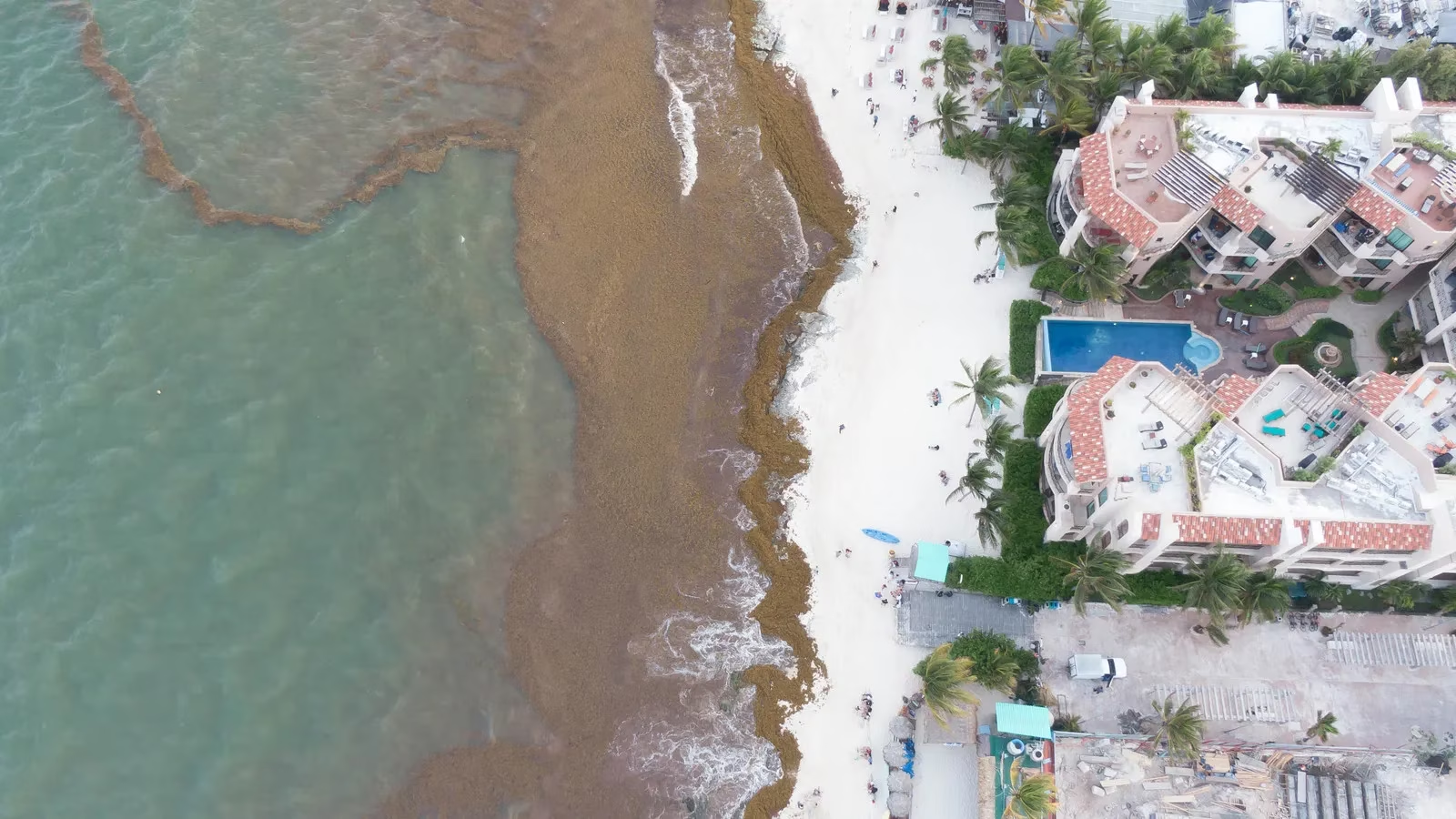
But hold onto your sombrero, because the revolution doesn’t stop at taxi meters. Let’s talk about the elephant—or rather, the disappearing sand—in the room. Playa del Carmen’s beaches, the very reason half of us book those all-inclusive deals, are eroding faster than my patience in an airport security line. Mayor Estefanía Mercado recently went on a walking tour of the most battered stretches of coastline, and I don’t mean a leisurely photo op. She was out there inspecting cliffs of missing sand like a detective at a crime scene. The mayor herself called the beaches the city’s “main asset for tourism,” which is like saying oxygen is my main asset for breathing. No sand, no suntan, no spring break magic.
Now, here’s where it gets spicy. In an attempt to fight erosion, a central Playa del Carmen hotel—rumour has it, the Hyatt—installed geotubes in front of its property. Think of geotubes as giant sausage-shaped sandbags designed to absorb wave energy and keep the beach in place. It sounds clever, right? Well, Playa del Carmen’s Secretary of Sustainable Environment and Climate Change wasn’t impressed. They slapped the hotel with a legal challenge, arguing the federal permits for those geotubes had more holes than a fisherman’s net. The real kicker? The environmental squad believes the tubes were actually making erosion worse, redirecting wave fury onto neighbouring stretches of sand. It’s the classic “I fixed my problem, now it’s your problem” scenario that drives neighbours—and local governments—around the bend. I can almost hear the beaches screaming, “Stop trying to save me, you’re only making me angrier!”
Meanwhile, back at Cancun International Airport, the plot thickens. We’ve all been there: the line that feels like it’s moving in reverse, the customs agent who looks at your passport like it personally insulted their abuela. Well, close to 100 customs agents recently went through a mandatory training session, and I’m not talking about how to stamp things harder. The course covered emotional management (hallelujah), quality systematization (fancy talk for “get your act together”), and customer service (shockingly, this includes not grunting). Think of it as a charm school for the people who hold the keys to your holiday. Given the crazy turnover among airport employees, the government wants to make this training as regular as my morning coffee run. The goal? To turn those long lines and frosty stares into something resembling a warm Mexican welcome. I’ll believe it when I see it, but I’m cautiously optimistic—like a cat watching a cucumber.
Spring break 2026 is shaping up to be a fascinating experiment. You’ve got a governor playing whack-a-mole with price-gouging taxi drivers, a mayor trying to keep the beach from pulling a vanishing act, and a squad of newly trained customs agents who might actually smile. Is it all perfect? Far from it. The geotube controversy shows that even well-meaning fixes can backfire, and those taxi sharks aren’t going to swim away without a fight. But for the first time in a while, it feels like someone in charge is paying attention to the stuff that makes tourists want to tear their hair out—or worse, not come back.
So, have I ever wiggled my toes in the troubled sands of Playa del Carmen? You bet. And honestly, knowing that there’s now a “comprehensive strategy” to prevent future erosion—which hopefully doesn’t involve more legal fistfights over sausage-shaped sandbags—gives me a glimmer of hope. If they can pull off this triple threat of cheaper transport, happier agents, and steadier beaches, Mexico might just earn itself a loyalty badge from travellers who’ve been burned before. Fingers crossed, mi amigos. And if you’re heading there this spring, keep an eye on your taxi fare—and maybe give that customs agent a friendly nod. They’ve just been to charm school.
Comments