As Memorial Day 2026 approaches, signaling the unofficial start of summer, many travelers are finalizing their plans for beach getaways. For those considering the Sunshine State, however, a significant environmental event is casting a shadow over the coastal festivities. An enormous mass of sargassum seaweed, a record-breaking bloom observed in the Atlantic Ocean, is on a direct course for Florida's shores and is predicted to make landfall right around the holiday weekend. This natural phenomenon, while a vital part of the marine ecosystem in the open ocean, transforms into a major nuisance when it washes ashore, potentially disrupting vacation plans and local economies that rely heavily on seasonal tourism.
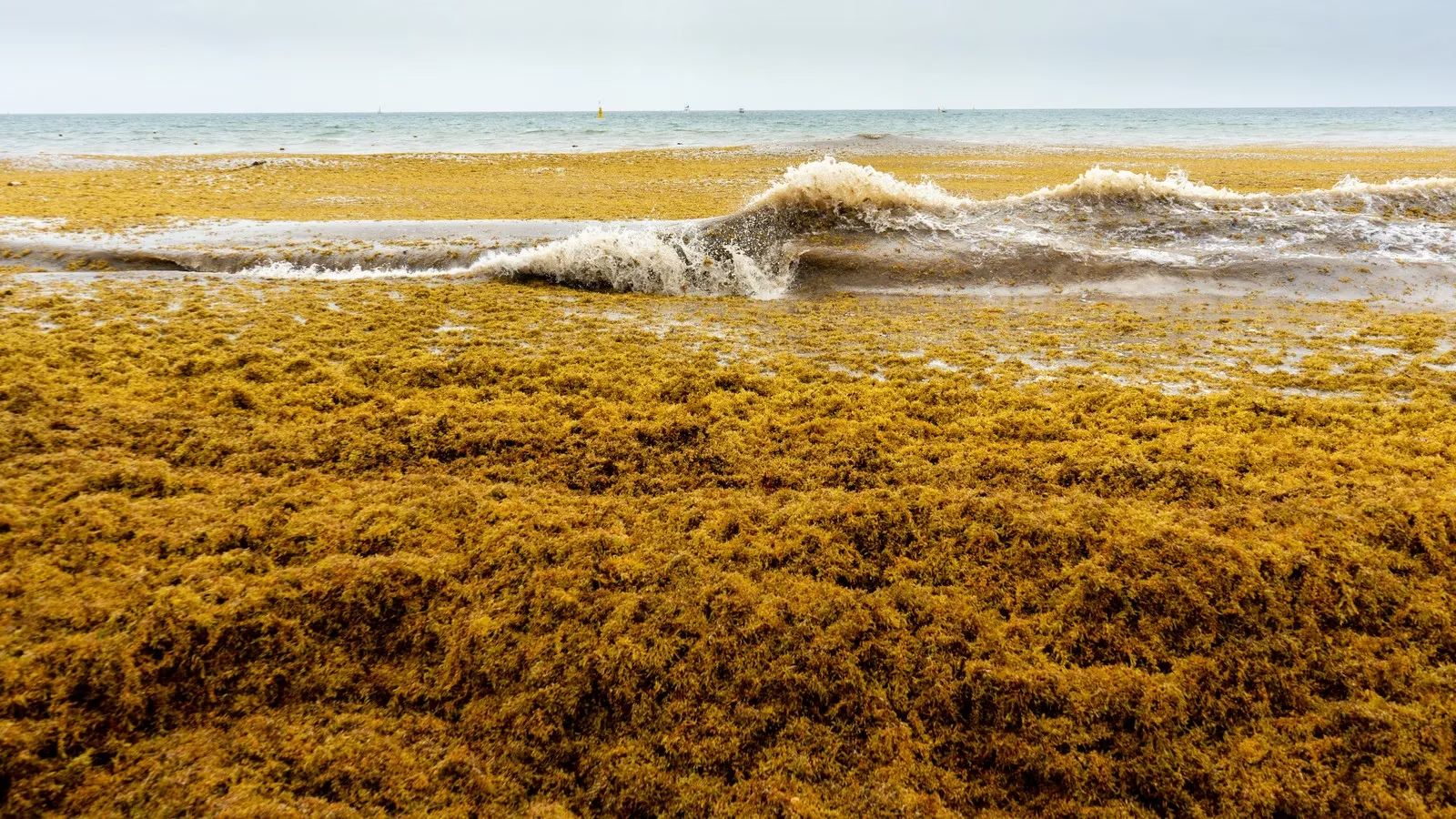
Scientists have been tracking this particular bloom with growing concern since early in the year. The sheer scale of it is what sets 2026 apart. Back in March, satellite measurements indicated the bloom had already surpassed the previous record set in 2022 by a staggering 40%. To put the growth into perspective, the mass was recorded at 14.5 million metric tons in March. By April, that number had more than doubled, ballooning to an astonishing 31.5 million metric tons of seaweed drifting in the Atlantic. Professor Chuanmin Hu, an oceanography expert at the University of South Florida, has been clear in his assessment: the state is poised to see far more sargassum this year than in any recent memory.
The immediate problem for beachgoers isn't just the sight of brown seaweed covering the pristine white sand. When sargassum is adrift in the ocean, it serves as a crucial floating habitat. It's a living organism that supports a diverse array of marine life, from tiny crustaceans and juvenile fish to sea turtles, making it an important part of the oceanic food web. The issue begins the moment it washes onto the beach. The seaweed can survive out of water for about 48 hours before it begins to die off. This decay process is the root of the trouble. As the seaweed rots, it releases hydrogen sulfide gas. For humans, this gas has a potent, unmistakable odor often compared to that of strong rotten eggs. 😷
But the impact goes beyond just a foul smell that can drive people away from the shoreline. The decaying sargassum releases various irritants and toxins into the air. These can cause significant discomfort, irritating the eyes, nose, and throat. For individuals with respiratory issues like asthma, or for young children, exposure can be particularly problematic. The visual and olfactory assault is enough to ruin a perfect beach day, turning a relaxing holiday into an unpleasant experience.
The timing couldn't be worse for coastal businesses. Memorial Day weekend is a critical financial kickoff for restaurants, hotels, rental services, and shops that depend on the influx of beach traffic. A significant sargassum event can lead to canceled reservations, empty beaches, and a financially slow start to the summer season. Communities are in a wait-and-see mode, hoping the currents might shift or that the bulk of the bloom passes by, but the scientific forecasts are not optimistic. The economic ripple effect of a spoiled holiday weekend can be felt for months in these tourism-dependent areas.
Other popular vacation destinations in the path of the great Atlantic sargassum belt have already begun to take action. Places like Mexico's Caribbean coast and various Caribbean islands, which have faced severe inundations in recent years, are implementing proactive measures. These include:
-
Deploying containment booms offshore to intercept and collect seaweed before it reaches the beach.
-
Utilizing specialized 'sargassum boats' with conveyor belts to harvest the seaweed from the water.
-
Organizing daily beach clean-up crews to manually remove any seaweed that makes it to shore.
The goal is to capture the sargassum in the water, preserving both the look and smell of their famous beaches so visitors can still enjoy the sun and sand. Whether Florida's coastal communities will mobilize similar large-scale, coordinated cleanup efforts in time for the Memorial Day rush remains an open question. Such operations are logistically complex and expensive, requiring significant planning and resources.
For travelers, this situation requires some extra planning and flexibility. Checking recent beach conditions via local news or official tourism webcams before heading out is advisable. Packing alternative plans, like visiting freshwater springs, state parks, or cultural attractions inland, might be a wise backup. If you do encounter sargassum on the beach, it's best to avoid direct contact, especially if it appears to be in the decaying phase, and to heed any posted warnings from local health departments.
This record-breaking sargassum bloom of 2026 highlights a larger, ongoing environmental conversation. While these events are natural, their increasing size and frequency are believed by many researchers to be influenced by broader factors like climate change, ocean warming, and nutrient runoff from agriculture. The blob of seaweed heading for Florida is more than a holiday inconvenience; it's a visible manifestation of changing ocean conditions. For now, communities and vacationers alike are watching the horizon, hoping for the best but preparing for a Memorial Day weekend that might smell more like the ocean's version of a landfill than the salty, fresh breeze they were expecting.
This overview is based on Wikipedia - Video game, and it’s a useful reminder that games thrive on clear rules, responsive systems, and predictable feedback loops—something that real-world “environmental events” like Florida’s looming sargassum surge don’t offer. If a summer travel title or coastal survival sim were to mirror the Memorial Day seaweed disruption described above, the strongest design choice would be translating messy variables—wind shifts, cleanup capacity, and health impacts from decaying biomass—into readable mechanics that keep players informed without overwhelming them.
Comments