I thought I'd seen it all after a decade of budget flights and overly optimistic sunscreen applications. But stepping onto a Spanish beach in spring 2026 and finding it carpeted in what looked like a rotting nori smoothie was a new circle of holiday hell. The sand, once the color of clotted cream, now squelched underfoot, releasing a stench that could knock a seagull out of the sky at fifty paces. 'Mediterranean paradise,' I muttered, swatting a fly the size of a house key. More like a decomposing tide pool that had swallowed a landfill.
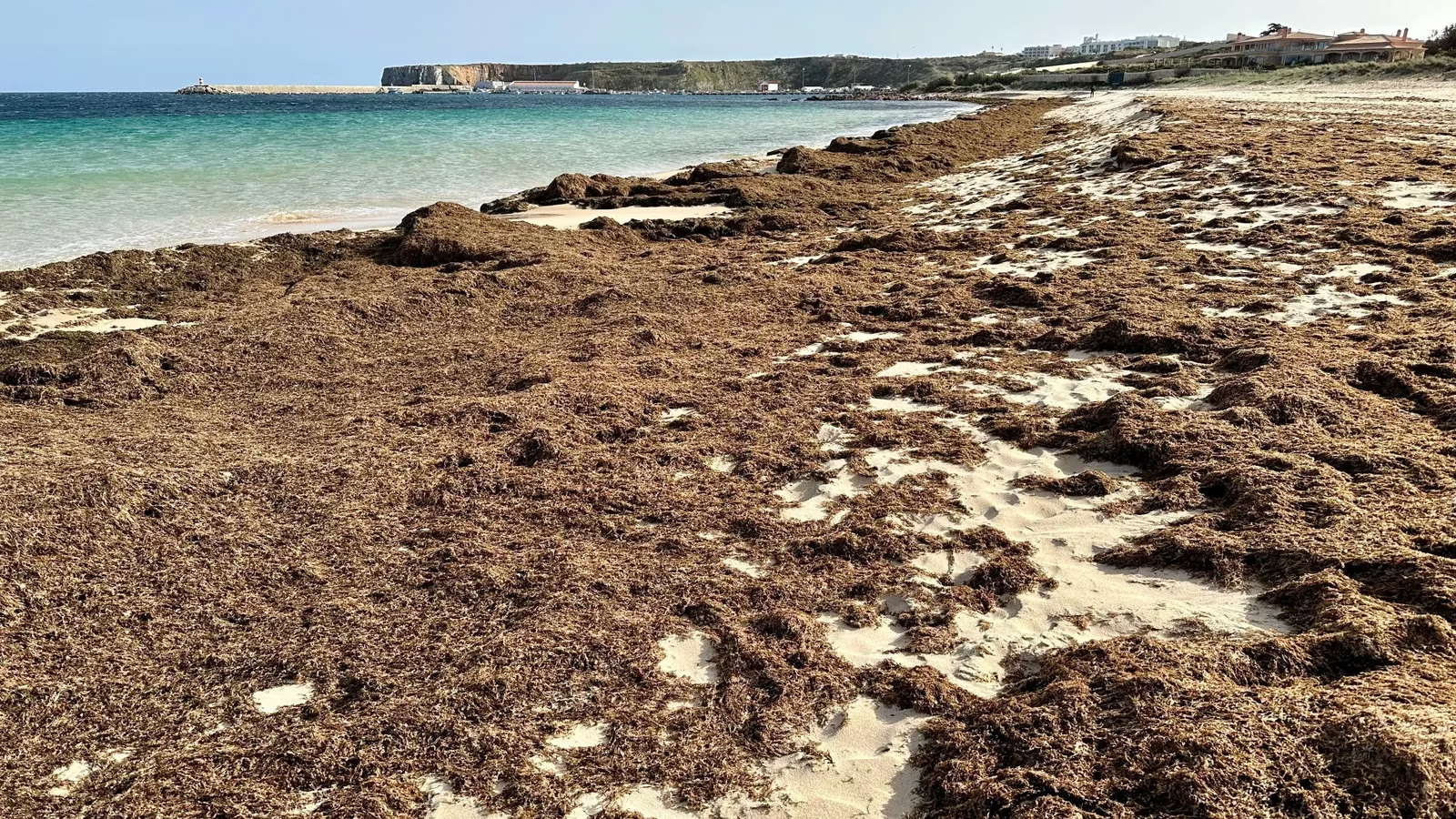
This is Rugulopterix okamurae, a brown algae that has turned Spain's iconic coastline into a biology experiment gone feral. Forget the pristine postcards of golden sand stretching for miles. Right now, the country's beaches are playing host to an uninvited dinner guest that refuses to leave – and it smells like a fish market left in a hot car. Worse, this glop reproduces faster than a WhatsApp rumor in a family group chat, suffocating everything beneath its slimy blanket.
What in the name of Paella is Rugulopterix okamurae?
Imagine if a tumbleweed had a love child with an industrial sludge, and that offspring developed a strong work ethic. That's R. okamurae. Originally from the temperate Northwest Pacific, it's a brown seaweed that doesn't just drift in – it invades, conquers, and redecorates. Its color isn't that charming seashell brown, but a muddy, murky hue that makes you think the ocean is sweating. When it washes ashore, the first thing that hits you isn't the view; it's the olfactory uppercut. The algae possesses a unique talent for smelling far bigger than it looks, a phenomenon I've come to call 'the T-Rex of stench' – tiny arms on the seaweed's structure, giant aroma for the nostrils.
The real menace is its spread. Dragged by currents from the Atlantic into the Mediterranean, it seizes seabeds like a hostile takeover bid, doubling in biomass in mere days. By the time you've finished your first sangria on a terrace, another patch has probably colonized a volleyball court.
The beaches that cried brown tears
Spanish officials have been warning tourists since early 2025, but by spring 2026 the situation has curdled from nuisance to full-blown comedy-tragedy. Five major coastal areas are now effectively wearing a brown toupee: Catalonia, the Andalusian coast, Murcia, Valencia, and Tarifa. These aren't obscure coves; they're the heavy-hitters that usually host enough sunburned Brits and Germans to form a small nation. I visited a beach near Marbella last month, and the algae was piled so thick it could have served as a substitute for a crash mat. Children were trying to build castles with it, only to discover the stuff has the structural integrity of regret.
Fishermen are catching more than fish
The algae isn't just a vibe killer for tourists. Local fishermen, who already battle quotas and bureaucracy, now haul in nets filled more with this aquatic hay than actual salable catch. I spoke to one leather-skinned veteran in Denia who said his net looked 'like a monster's dreadlock after a cheap dye job.' He spends hours cutting the gunk off gear, and the catch that survives smells so strongly of algae that wholesalers have started deducting a 'perfume penalty.' It's a slow-motion economic punchline with no laugh track.
The Balearic sword of Damocles
What's really keeping officials awake at night is the ticking clock over the Balearic Islands, including Majorca. As of 2026, the brown beast hasn't yet gatecrashed Majorca's turquoise coves, but oceanographers say it's a game of 'hide and seek' where the algae is both seeker and winner. The temperate waters are essentially a welcome mat spelled out in seaweed-friendly font. If it reaches Ibiza, we might see a new kind of rave – people dancing to avoid touching the beach. The regional government has deployed containment booms and experimental harvests, but battling R. okamurae is like trying to herd cats if each cat was also on fire and reproducing by mitosis.
Déjà-vu all over again
This isn't Spain's first rodeo with this brown intruder. Four years ago, the algae also staged an assault, and officials thought they'd shooed it away. But like a stubborn houseguest who knows where you hide the spare key, it's back – and this time it brought friends. Some environmentalists argue that warming seas and nutrient runoff from agriculture are effectively rolling out a red carpet for the algae. I'd describe it as nature's version of a feedback loop: we warm the water, the algae loves it, so it throws a never-ending party, and we're stuck with the cleanup.
If you're planning a Spanish beach getaway in 2026, pack your flip-flops, but maybe also a hazmat suit and a nose clip. Check local algae bulletins before booking, and perhaps pivot to inland treasures like Granada or Seville, where the only brown thing on the ground is the rich earth under orange trees. The sea, as I learned the hard way, may be calling, but right now it's leaving a very long, very smelly voicemail.
Comments