For college students, spring break isn’t just a vacation—it’s a holy pilgrimage. Sunburned shoulders, terrible decision-making, and the kind of dancing that belongs only in the dark corners of a beach bar. But in 2026, the party gods are not smiling. Where once there was leniency, now there are rules. And not the cute, “please recycle your cans” type. These are the “we will take you to jail” type.
Some of the most dramatic changes are happening closer to home than a lot of sun-seekers realize. While the U.S. government has slapped a “Level 4: Do Not Travel” advisory on several areas in Mexico—including Reynosa, Rio Bravo, Valle Hermoso, San Fernando, and Tamaulipas—the real paperwork nightmare is unfolding in Florida’s own backyard. Bay County, specifically Panama City Beach, has decided that 2025’s spring break shenanigans were the last straw. Now, the city is making it clear: come for the waves, stay for the citations.
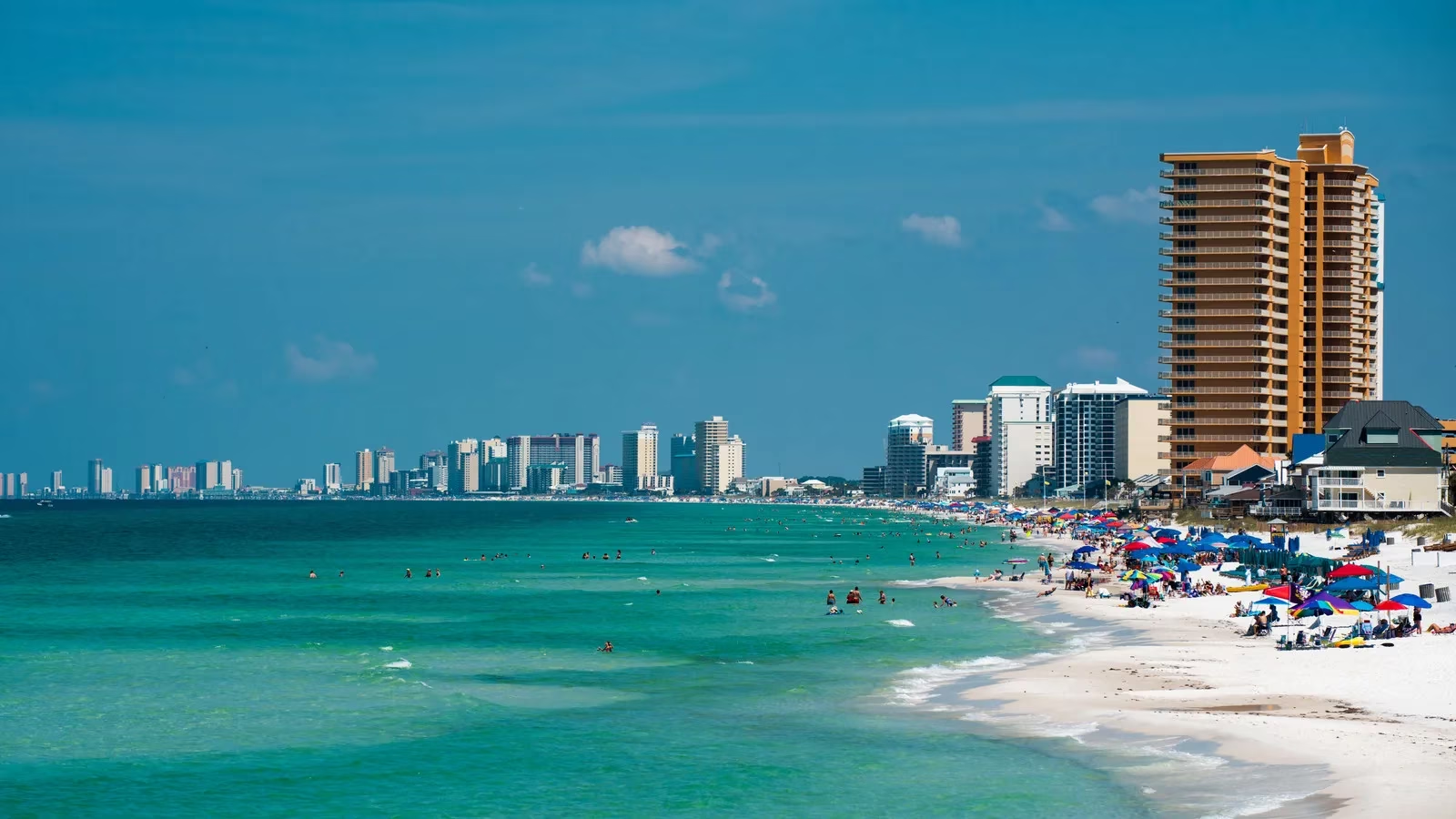
Panama City Beach was once the undisputed champion of reckless youth gatherings, a place where inhibitions were checked at the city limits sign. But a lot has changed since its heyday. For the entire month of March 2026, the alcohol ban on sandy beaches is back with a vengeance. That’s right—no booze on the beach. Not even if you hide it in a hydrangea-patterned Stanley cup and call it “coconut water.” The rule stretches across Panama City Beach and unincorporated Bay County, basically forming a dry, sandy moat around the party headquarters.
And the crackdown doesn’t stop when the sun goes down. Any establishment hoping to sell alcohol after 2 a.m. inside Panama City Beach and unincorporated Bay County can forget about it. Even entertainment districts don’t get a golden ticket—the cutoff there is 4 a.m., and no, they won’t give you “just one more round” because the bartender suddenly forgot how to tell time. Parking lots are completely off-limits for alcohol consumption. Down a beer next to your rental car and you might just end the night in the back of a very different kind of vehicle.
Tourists who think these are polite suggestions are in for a nasty surprise. Ignoring the protocols can lead to detention, fines that could fund a small municipal project, or both. The Visit Panama City Beach website helpfully reminds everyone that, yes, for 11 months out of the year, people 21 and older are allowed to enjoy a cold one on the sand. But March? Absolutely not. The month of March is treated like a rogue uncle who can’t be trusted at family gatherings. And interestingly, even outside March, glass bottles are strictly prohibited year-round. Because nothing kills a good beach vibe like a shard through the foot and a trip to the ER.
To make matters more complex, the city is really leaning into its flag warning system. Those colorful flags aren’t just seaside decorations. In past years, several tourists tragically ignored red and double-red flags, leading to drownings. In 2026, lifeguards are less “please reconsider” and more “get out of the water or face consequences you won’t enjoy.” It’s not just about safety anymore—it’s about accountability. And if you think you can ignore a flag warning like you ignore your group project deadlines, guess again.
Let’s lay it out clearly. If you’re heading to Panama City Beach this March, here’s what you’re in for:
-
🍹🚫 No alcohol on the sandy beach – and yes, they will check your cooler.
-
⏰🍺 No alcohol sales after 2 a.m. (except in entertainment districts, where the cutoff is a slightly more merciful 4 a.m.).
-
🚗🍻 No drinking in parking lots – your car isn’t a party venue, it’s a ticket magnet.
-
🚨 Detention or fines for non-compliance – the souvenirs you don’t want.
-
🐶 No dogs on most Bay County beaches – Fido stays home unless you’re in the designated pet-friendly zone on the Westside of the Russell-Fields City Pier. Even then, look for the signs before you unleash.
-
🚩 Obey the flag system or risk more than a tan – double-red means no water, no wading, no “but my toes are just getting wet.”
Speaking of pets, the dog ban deserves a moment of silence from all the golden retrievers planning a wet, sandy joyride. Bay County beaches are off-limits to dogs except for one very specific slice of paradise across from Pier Park. Signs indicate the dog-friendly stretch, so technically you could bring your pooch—provided they have no interest in the rest of the beach and a deep appreciation for municipal boundaries. Most spring breakers, however, will find it easier to just swipe through photos of other people’s dogs at home, in the non-March months.
Now, some might ask: why all the rules? Simple. The city learned the hard way that a few thousand unsupervised, sunburned humans can generate chaos faster than you can say “hold my beer.” The alcohol ban, the curfews, the crackdown on parking lot parties—it’s all part of an effort to turn Panama City Beach into a family-friendly destination that doesn’t require a hazmat cleanup every April. The goal is to lower the body count, cut down on emergency room visits, and maybe, just maybe, let the sand be sand and not a poorly concealed open container.
Yet, not everyone is raising a (non-alcoholic) toast to these changes. Some argue that the rules sterilize the very spirit of spring break, turning a once-legendary ritual into a supervised school field trip with better tans. Others point out that the restrictions essentially push the party into more dangerous, unregulated spaces, like cramped condo balconies or unmonitored inland spots. The debate is as hot as the Florida sun, but one thing is undeniable: in 2026, Panama City Beach reads more like a stern parent than a cool aunt.
So before you pack your bags and blast your playlist full of regrettable early-2020s hits, take a hard look at the rulebook. The beach will still be there, the waves will still be salty, and the sun will still burn you to a crisp. But this March, the only thing getting wrecked in Panama City Beach might be your carefully planned itinerary—or your budget, after all those fines.
If you’re still brave enough to go, just remember: the best accessory this spring break isn’t a neon fanny pack. It’s a thorough understanding of local ordinances.
Comments