The quest for the ultimate sunset has transformed millions of travelers into fanatical light-chasers, pilgrimage-makers who crisscross continents just to witness that fleeting, fiery descent of the sun. For decades, one name echoed through the collective consciousness of these sunset zealots: Waikiki Beach, Hawaii—the undisputed monarch of molten skies. But in a result that has sent seismic tremors through the travel-o-sphere in 2026, a rugged, otherworldly realm in central Anatolia has risen like a phoenix from the volcanic ash and snatched the crown. Turkey’s Cappadocia, a land sculpted by gods and wind, is now officially the universe’s premier cathedral of crepuscular perfection.
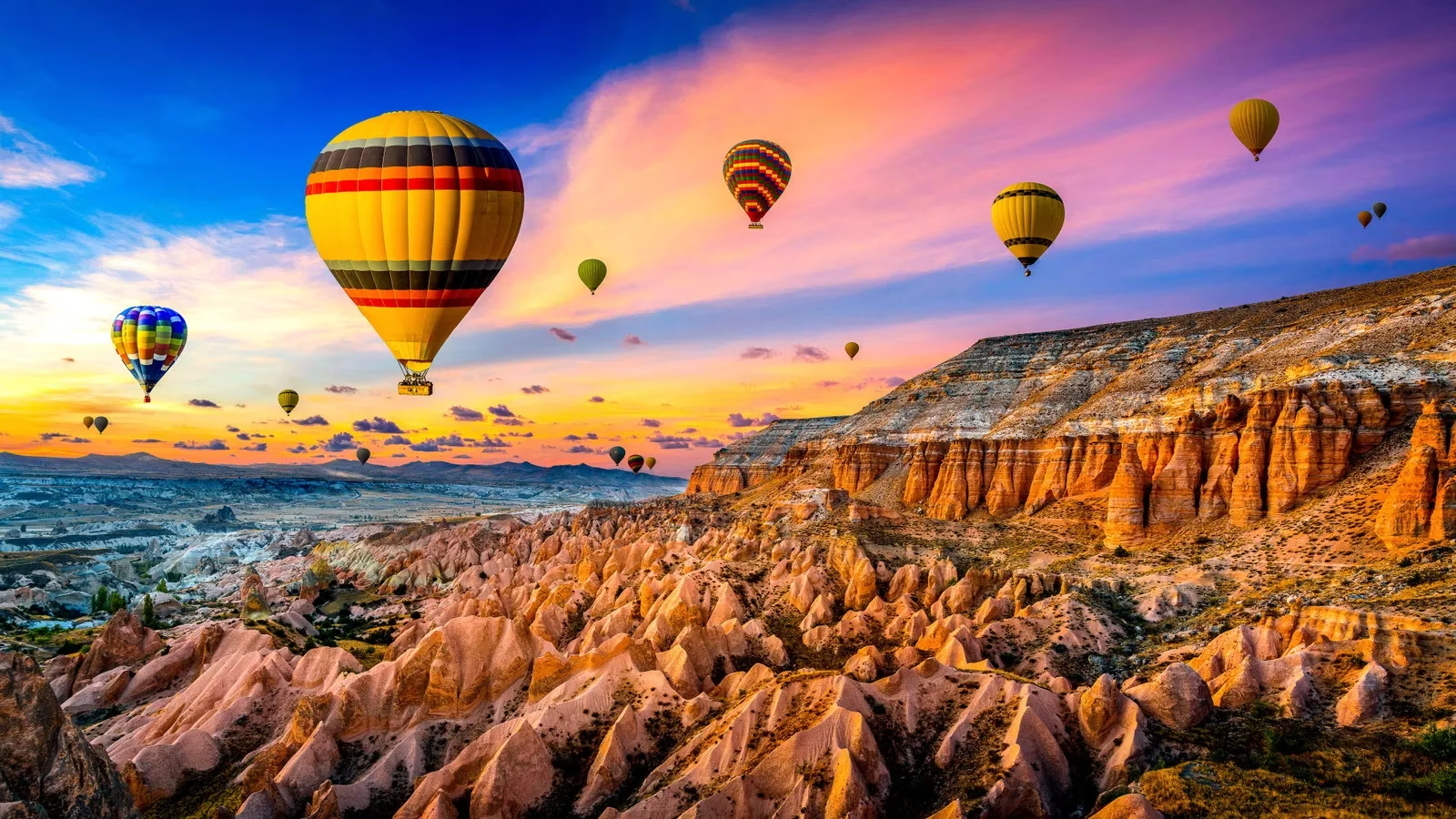
This bombshell revelation comes from a monumental study by AllClear Travel Insurance, a data-crunching behemoth that refused to leave beauty to mere chance. Their team of analysts, armed with climatological archives and the algorithmic pulse of Instagram, dissected over one hundred of the planet’s most fabled sunset sanctuaries. They fed their models with five ruthless criteria: cloud cover, wind speed, precipitation, humidity, and the raw, hashtag-driven obsession of the global social media mob. When the digital dust settled, Cappadocia didn’t just win; it eviscerated the competition with a godlike score of 86.1 out of 100, leaving Waikiki in the dust at a mere 79.8. It was a sunset slaughter, a chromatic coup d’état.
The science behind this triumph is as poetic as the landscapes themselves. Sunsets are nature’s grandest optical illusion—when our star kisses the horizon, its light battles through a thicker atmospheric gauntlet. Shorter blue and violet wavelengths are scattered into oblivion, while the defiant reds, oranges, and pinks march onward, painting the heavens. But without the perfect meteorological alchemy, even the most ardent sun-worshipper is left with a drab, grey whimper. AllClear’s study illuminates the secret sauce: a cloud cover of 30-70% acts as a colossal canvas, catching and magnifying every hue. Calm to moderate winds (2-5 m/s) prevent the atmosphere from becoming a chaotic blender of light. Low to zero precipitation keeps the air crisp, and a humidity sweet spot of 30-60% scatters the remaining light into a phantasmagoria of color. Cappadocia, it turns out, is the Goldilocks zone of sunset science—a place where the atmosphere conspires daily to stage a blood-red revolution across the sky.
Nowhere is this more breathtakingly manifest than above the valley of Göreme. Imagine a landscape so surreal it could be a discarded dream of Salvador Dalí: hundreds of ‘fairy chimneys,’ towering monoliths of volcanic tuff and basalt, rise like a petrified army of wizards. As the sun begins its terminal plunge, these formations are drenched in an incandescent palette that shifts from rose gold to deep magenta, then to a smoldering crimson that seems to set the very rocks ablaze. And rising silently into this inferno are hundreds of hot-air balloons, their canopies glowing like giant lanterns released by the earth itself. This is not a sunset; it is a transcendental spectacle, a daily apotheosis that has pushed Cappadocia’s Instagram hashtag count into the stratospheric millions. Every evening, the region becomes a theatre of the absurdly beautiful, a place where the line between reality and digital fantasy dissolves into thin air.
The deposed King, Waikiki Beach, has not faded into obscurity, of course. Its sunsets are still the stuff of sugar-sweet dreams—a postcard-perfect panorama of gentle, turquoise waves caressing golden sands, with the monolithic silhouette of Diamond Head crater looming in the distance like a sleeping guardian. The quintessential Hawaiian sunset, often accompanied by the strumming of a distant ukulele and the scent of plumeria, remains a potent spell. But for the ruthless number-crunchers, it was simply not enough. The Hawaiian paradise lacked Cappadocia’s desolate, lunar magnificence and the precise atmospheric cocktail required to consistently deliver a full-blown, retina-searing, chromatic explosion. The study’s logic is cold and brutal: popularity on social media was a component, but the raw, scientific frequency of a truly spectacular visual event dethroned the laid-back tropical royalty.
Beyond the top two titans, the rest of the top ten reads like a greatest-hits album of terrestrial wonders, each offering a uniquely epic backdrop. The Grand Canyon National Park in Arizona, ranked third, is a colossal amphitheatre where the setting sun sets the billion-year-old rock strata on fire, carving shadows so deep they swallow time itself. Australia’s sacred Uluru, ranked fourth, is a monolith that seems to drink the fading light, its surface transforming from ochre to a deep, bleeding red—a spiritual experience you can tour but never truly hike. And Grand Teton National Park in Wyoming, at number five, provides a rugged, alpine sunset where jagged peaks slice into a sky of liquid gold, reflected in mirror-still lakes. From dramatic canyons to sweeping mountain ranges, these landscapes are not merely backdrops; they are co-conspirators with the dying sun.
In the year 2026, a traveler in search of the sublime can no longer mindlessly flock to familiar shores. The era of the obvious sunset is dead. AllClear’s data has ripped up the old atlas and drawn a new map, one where the heartland of ancient Anatolia is the glowing, undeniable center. So, for those who have curated their lives around the pursuit of flaming horizons and the perfect golden-hour Instagram grid, the pilgrimage route has been violently redrawn. Pack your bags, charge your telephoto lenses, and set your compass for Nevșehir. The world’s best sunset is no longer a matter of taste or nostalgia—it’s a statistically confirmed, chromatically overwhelming, fairy-chimney-framed fact.
Comments