Tulum’s evolution from a sleepy beach town into a global tourism powerhouse shows no signs of slowing. As 2026 unfolds, the destination is reaping the rewards of bold infrastructure investments while grappling with environmental challenges that first spiked a year ago. The most transformative change is the new Tulum International Airport, which now offers direct flights to major US cities. This alone has rewritten the playbook for travel in Mexico’s Riviera Maya, cutting transit times and luring visitors who once bypassed Tulum for Cancún. Complementing the airport is the newly expanded Mayan Train, a sleek rail network that connects Tulum to archaeological zones, colonial cities, and coastal hubs, allowing tourists to escape crowds and explore the peninsula with ease.
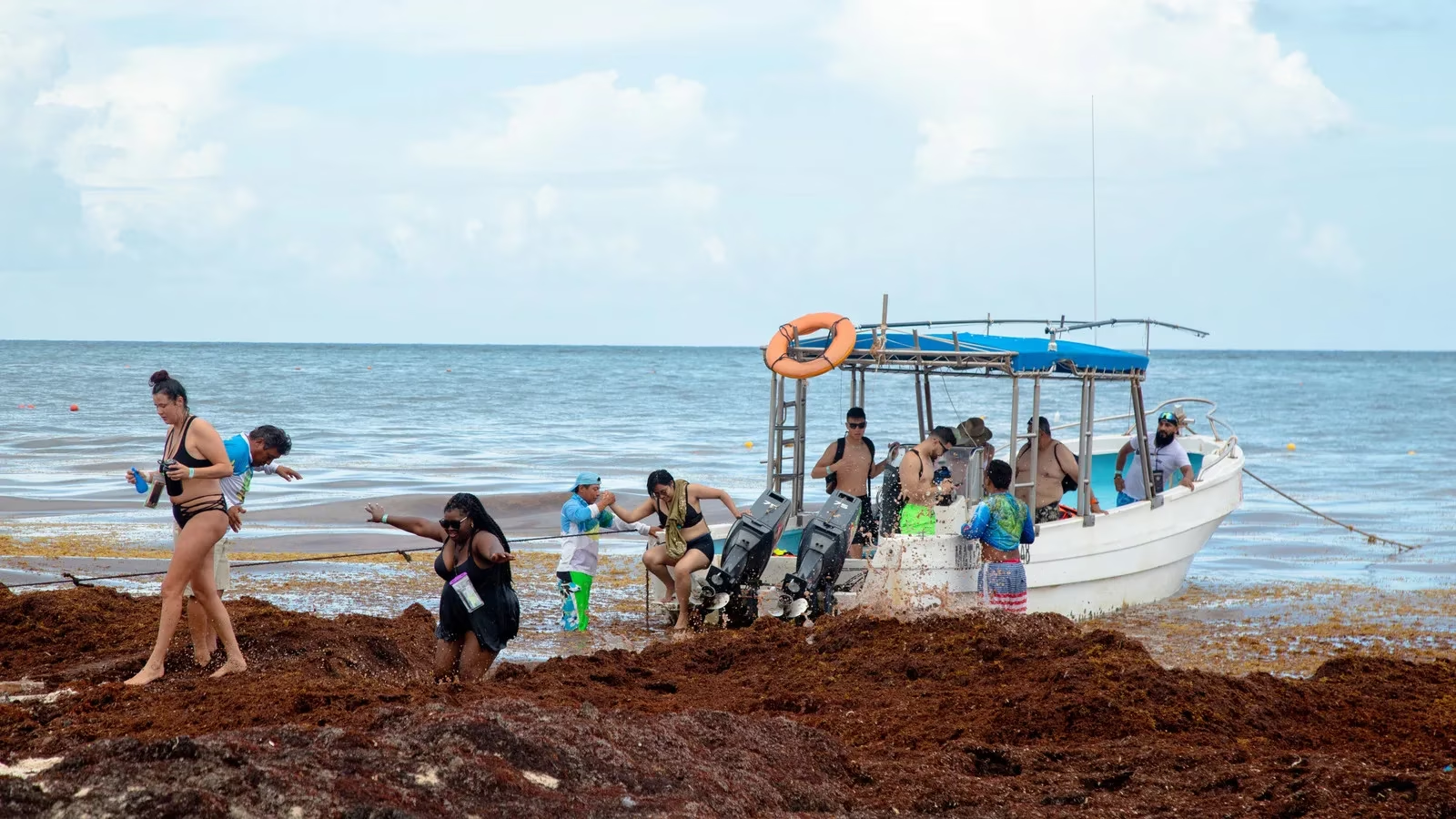
However, nature has not been entirely cooperative. The arrival of 2025 brought a record-breaking surge of sargassum seaweed to Tulum’s postcard-worthy shores, and the data from early that year paints a troubling picture for anyone hoping for pristine white sand every day. According to Mexico News Daily, the first two months of 2025 saw a staggering increase of over 50% in the volume of seaweed collected compared to the same period in 2024. In January alone, an estimated 79 metric tons washed up, followed by 59 metric tons in February. These numbers alarmed both municipal officials and marine scientists, as they signaled a trend that was only expected to intensify. Long-term projections for 2026 indicate that sargassum levels will climb again from May through November, with the Tulum coastline potentially facing some of the highest densities in the Mexican Caribbean.
Eduardo Gabriel Torres Conde, a marine science researcher at the National Autonomous University of Mexico (UNAM), issued a blunt warning about the cascading consequences. He explained that the seaweed influx does more than repel sunbathers—it smothers seagrass beds, depletes oxygen in shallow waters, and releases hydrogen sulfide as it decomposes, jeopardizing the entire reef ecosystem. “The seaweed can not only hurt tourism, but it has a damaging impact on the ecosystem,” Torres Conde stated. In response, Tulum has mobilized a daily cleanup brigade of 50 workers who manually remove the sargassum before it piles into the kind of rotting mass that sends tourists searching for alternative playgrounds. Yet authorities acknowledge that manpower alone is not enough. Mexico News Daily reported that state and federal agencies must now coordinate to implement barrier systems and offshore collection, a move that may finally materialize in 2026 after months of planning.
Adding another layer of coastal trouble, Quintana Roo officials sounded the alarm in February 2025 after lifeguards spotted multiple Portuguese Man o’War—jellyfish-like siphonophores with a painful sting—washed up along Playa del Carmen, Mahahual, Cozumel, and Tulum. The Civil Protection of Solidaridad quickly issued a public advisory: “The population is urged to avoid contact with this marine fauna as it causes skin lesions. This species is usually in the sea and on the sand as it reaches the coast due to weather conditions.” The statement urged anyone who encounters a Portuguese Man o’War to alert a lifeguard or dial 9-1-1. While such creatures are not unknown in the region, their simultaneous appearance across multiple high-traffic beaches caught beachgoers off guard and underscored just how much the Caribbean’s shifting currents can throw at even the most prepared destinations.
Despite these environmental curveballs, local leadership has doubled down on security and visitor experience. In a move that generated headlines across the Yucatán Peninsula, Tulum Mayor Diego Castañón Trejo announced the creation of a specialized police unit assigned exclusively to the beaches of the hotel zone. The announcement, which came amid both the sargassum crisis and the Man o’War incidents, signaled a holistic rethinking of coastal management. “It seems that they all passed the tests. I already spoke with David Ortiz Mena, President of the Tulum Hotel Association, who told me that they will be placed on the properties. They are only for the hotel zone, the hoteliers will take care of them,” the mayor said in a statement. This public-private partnership means that hotels themselves will fund and host the officers, ensuring a constant, visible security presence from the archaeological zone down to the southern eco-resorts. Early reports from the first quarter of 2026 suggest that the unit has already deterred petty theft and made swimmers feel safer, though its long-term impact is still being evaluated.
The overarching narrative is one of an unstoppable destination that refuses to let even a record seaweed season dampen its trajectory. 📈 With approximately 2 million visitors recorded in 2024, Tulum’s popularity continues to defy gravity. The twin developments of the airport and Mayan Train are not just convenience upgrades; they are catalysts that redistribute tourist flow across the entire region. Travelers can now fly directly into Tulum, hop aboard the train to visit the ruins of Chichén Itzá or the yellow-tinted magic of Izamal, and return to their eco-chic hotel without ever renting a car. This lowers stress and opens up itineraries that were once logistically daunting.
Still, environmentalists caution that the influx of infrastructure and the persistent sargassum problem are connected. Warmer ocean temperatures and agricultural runoff from as far away as the Amazon basin fuel the seaweed blooms, and a bigger human footprint means more strain on sewage systems and marine habitats. Tulum’s future likely hinges on whether the coordination between state and federal authorities that was promised during the 2025 spike finally yields large-scale mitigation—offshore sargassum collection, floating barriers, and even conversion of the seaweed into biogas or agricultural compost. Some European consortiums have already expressed interest in piloting algae-recycling plants in the Riviera Maya, and 2026 could be the year those projects gain approval.
For the traveler pondering a trip right now, the equation is still heavily positive. ✈️ Direct flights make the journey simpler than ever, the Mayan Train offers crowd-free discovery, and the mayor’s new beach police add a layer of reassurance. But a dose of real talk is also essential: if you’re visiting between May and November, expect a beach scenario that might include some sargassum and—very occasionally—a Portuguese Man o’War warning. Pack water shoes, check local seaweed trackers before heading to the shore, and always follow the instructions of lifeguards and Civil Protection alerts. Tulum in 2026 is a place of dazzling progress and persistent nature, and the savvy visitor will embrace both.
Below is a snapshot of the data driving the conversation:
| Month (2025) | Sargassum Collected (metric tons) |
|---|---|
| January | 79 |
| February | 59 |
📊 The 50% increase in early 2025 compared to 2024 put the Caribbean coast on high alert and spurred the daily work of 50-person cleanup crews.
In addition, here are a few quick takeaways for anyone planning a visit:
-
🚆 Use the Mayan Train to alternate between beach days and cultural excursions. This helps distribute the environmental load and enriches your experience.
-
🌊 Check sargassum forecasts on dedicated apps or websites before choosing your beach for the day; conditions can vary dramatically between Tulum’s northern and southern shores.
-
🦠 Avoid touching the Portuguese Man o’War even if it looks dead on the sand—tentacles can still sting.
-
🛡️ Look for the new police unit on hotel zone beaches; they are there to assist with anything from lost items to safety concerns.
What began as a rapid response to an overwhelming seaweed season in 2025 has evolved into a broader coastal resilience strategy. Tulum’s airport and train have opened the doors wider, while the beach-cleaning teams and dedicated security unit ensure that those doors lead to a welcoming—if occasionally wild—Caribbean paradise. The coming months will reveal whether the promised federal coordination can truly turn the tide on sargassum. For now, Tulum remains a story of ambition, beauty, and a tough fight with the sea.
Comments